Quick answer: a tooth breaks when the force pressing against it, whether from grinding, a bad bite down on something hard, or just an accident, finally outweighs whatever structure is left to resist it. That’s the whole equation. Everything else, bruxism, decay, old fillings, age, is really just a variable that tips the scale one way or another.
Here’s what throws people off. They chip a molar on a piece of popcorn and assume the popcorn did it. Maybe it did. But sometimes a kernel is just the final straw on a tooth that’s been compromised for years by a large filling, or by nightly clenching nobody noticed until the enamel gave out. One broken tooth doesn’t mean you’ve got some looming dental catastrophe. It also doesn’t mean it was pure bad luck. Usually it’s somewhere in between, and figuring out where matters if you don’t want to be back in the dentist’s chair in six months with the same problem on a different tooth.
Key Takeaways
- Why do teeth break? Teeth can break when chewing forces exceed the strength of the remaining tooth structure. Grinding, decay, large fillings, hard foods, trauma, and years of wear can all contribute.
- Teeth cracking causes often involve more than one factor. Large or old fillings, weakened tooth structure, repeated clenching, and biting hard objects can make a tooth more vulnerable to cracks and fractures.
- Knowing how to prevent cracked teeth starts with protecting weakened teeth, avoiding hard objects and ice, treating decay, maintaining good oral hygiene, and having signs of grinding or unusual tooth wear checked by a dentist.
Why Do Teeth Break?
Question: Why do teeth break, and how can you prevent cracked teeth?
Answer: Teeth can break when the forces placed on them become greater than the strength of the remaining tooth structure. Common causes include bruxism, large or old fillings, decay, hard foods or objects, trauma, and cumulative wear over time. Bruxism tooth damage from repeated grinding or clenching can contribute to chips, cracks, and worn enamel, while older restorations may leave less natural tooth structure to withstand chewing forces. To understand how to prevent cracked teeth, avoid chewing ice or hard objects, maintain good oral hygiene, address decay and damaged fillings, and ask a dentist about recurring chips, cracks, tooth sensitivity, or possible grinding.
Why Do Teeth Break in the First Place?
Think of a tooth as a structure under constant load, not unlike a bridge cable that handles traffic fine for decades until corrosion or extra strain finally snaps it. A tooth breaks, generally, when the forces applied to it exceed what the remaining tooth structure can absorb. That’s the mental model worth keeping in your head before we get into the specifics.
There are really three broad buckets here. First, too much force: grinding, clenching, biting down on something harder than the tooth was built to handle, chewing on pens or ice, or blunt trauma from a fall or a fist to the face. Second, not enough tooth left to resist that force. A tooth with a large filling has less of its own natural structure holding things together, and a tooth that’s been hollowed out by decay is similarly compromised. Even prior dental work changes how chewing forces get distributed across the tooth. Third, and this one’s sneaky, repeated stress accumulating slowly. Small stresses stack on top of each other, and a tooth can look completely fine right up until a crack becomes visible or symptomatic. Age itself isn’t the villain here. It’s the decades of chewing, the restorations placed along the way, and cumulative wear that quietly set the stage.
| What stresses the tooth | What weakens the tooth | What can happen |
|---|---|---|
| Grinding or clenching | Large filling | Crack |
| Hard foods or ice | Decay | Chip |
| Trauma or sudden impact | Heavy wear over years | Fracture |
Can Grinding or Clenching Break Your Teeth?
Bruxism, in plain terms, is the repeated grinding or clenching of teeth, either while you’re awake and stressed at your desk, or asleep and completely unaware it’s happening. Sleep bruxism is the trickier version because there’s no conscious override. You can’t tell yourself to stop clenching at 3 a.m. if you don’t even know you’re doing it.
Repeated grinding forces, especially at night, can contribute to worn enamel, chips, cracks, and other dental issues over time, according to the Mayo Clinic’s breakdown of bruxism risk factors, which also flags things like caffeine intake and certain medications, including SSRIs, as contributors worth discussing with a dentist. What makes nighttime grinding particularly rough on teeth is that it lacks the natural buffering that happens during normal chewing, where saliva and food act as a bit of a cushion. Clenching in your sleep is just tooth against tooth, hour after hour, and Colgate’s oral health resources note this multiplies the structural fracture risk considerably compared to daytime function.
So how do you know if grinding might be part of your story? A few clues tend to show up together:
- Flattened or visibly worn tooth surfaces
- Chips appearing on teeth with no clear cause
- Jaw soreness or fatigue, especially first thing in the morning
- Recurring headaches, often centered near the temples
- Tooth sensitivity that comes and goes
- A partner or roommate mentioning they’ve heard grinding sounds at night
None of these prove bruxism on their own. A dentist has to actually look at the wear patterns, check the jaw muscles, and ask about symptoms before connecting the dots. I’d be cautious of anyone, including yourself, jumping straight to “it’s definitely grinding” without that kind of look.
Other Common Reasons Teeth Crack or Break
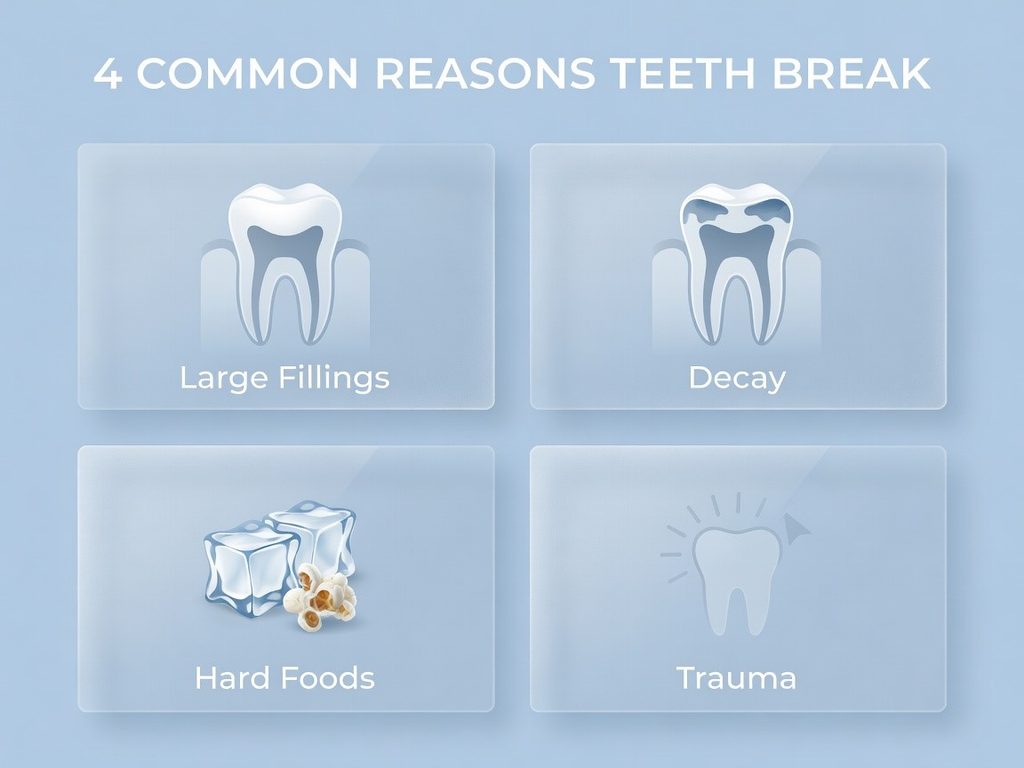
Grinding gets a lot of the attention, probably because it sounds dramatic, but plenty of broken teeth have nothing to do with bruxism at all.
Large or older fillings. A tooth with an extensive restoration simply has less of its own natural material left standing guard. That doesn’t mean an old filling is automatically failing or needs replacing tomorrow, but it does mean the tooth deserves a closer look during routine visits. Research on restorative failures backs this up, showing that teeth with deep intracoronal preparations fatigue differently than intact teeth under the same chewing loads. If you’ve got a mouth full of decades-old silver or composite work, that’s worth a conversation, and understanding what large filling problems can do over time helps frame why monitoring matters more than panic.
Decay or weakened structure. Decay eats away at the internal architecture of a tooth, and once enough structure is gone, what’s left can’t tolerate normal biting forces the way it used to. Sometimes the “break” people notice is really the decay finally revealing itself, not a fresh problem showing up out of nowhere.
Hard foods and objects. Ice is the classic offender. Hard candy, unpopped popcorn kernels, tough nuts, and the habit of chewing pens or fingernails all put localized, sudden force right where teeth aren’t designed to take it. Risk here really depends on the condition of the tooth being bitten down on. A healthy molar might shrug off a kernel. A heavily filled one might not.
Trauma and accidents. Sports injuries, falls, car accidents, a stray elbow during a pickup basketball game, these can crack even a perfectly healthy tooth. Trauma doesn’t care how strong your enamel is if the impact is hard enough.
Does Age Make Your Teeth More Likely to Break?
I get why people assume this. You’ve had the same teeth for fifty, sixty years, surely they’re just wearing out like an old pair of hiking boots. But age by itself isn’t what breaks a tooth. What tends to happen is that older adults accumulate more restorations, more cumulative wear from decades of chewing, and sometimes gum or bone changes that shift how forces move across the mouth. It’s the accumulation, not the birthday count, doing the damage.
Myth: “I’m older, so a broken tooth was inevitable.” Reality: age is one variable among several. Tooth structure, prior restorations, wear patterns, and habits like grinding all matter more than the number on your driver’s license. A tooth with no symptoms at all can still benefit from a routine dental check, particularly if it’s carrying a large filling or visible wear.
How Can You Prevent Cracked or Broken Teeth?
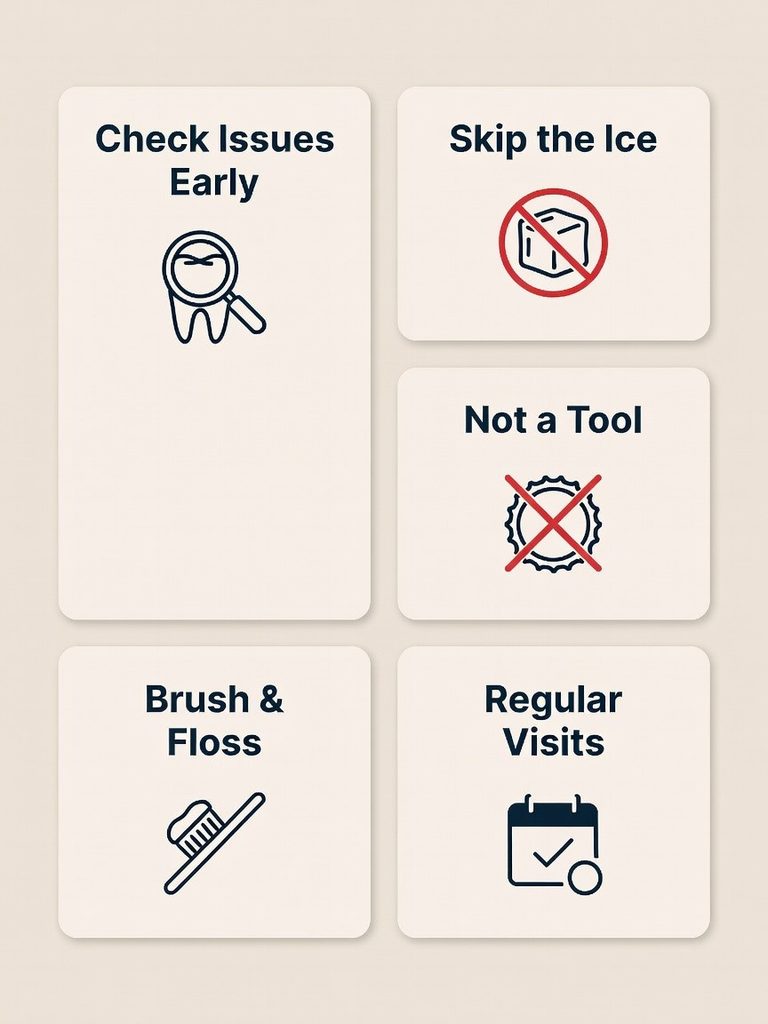
This is the part people actually want, so here it is, laid out plainly rather than buried in vague advice about “taking care of your teeth.”
- Get persistent or recurring tooth issues checked before they turn into a fracture, not after.
- Skip the ice chewing and steer clear of genuinely hard foods or objects.
- Stop using your teeth as tools. Bottle caps and packaging tape have ruined more molars than people realize.
- Keep up with brushing and flossing to reduce the decay risk that weakens tooth structure from the inside.
- Stay on a regular dental visit schedule so older restorations and heavily worked teeth get monitored, not forgotten.
If grinding seems like it might be part of your picture, ask your dentist whether a night guard makes sense for your specific situation. Don’t just grab a generic mouthguard off a drugstore shelf and assume the problem’s solved. A poorly fitted guard can do very little, and sometimes the real fix involves addressing an underlying dental issue rather than only cushioning the tooth from force.
Should You Get a Night Guard If You Grind Your Teeth?
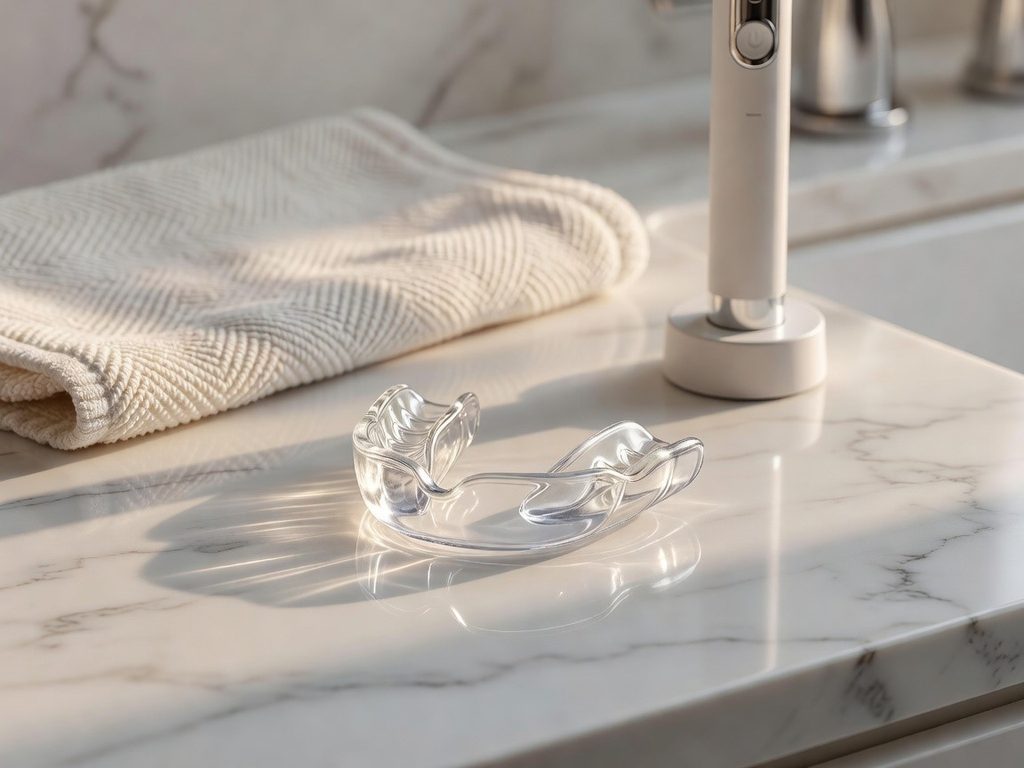
A night guard can be genuinely useful for someone whose sleep bruxism is contributing to wear or fracture. It is not, however, some universal fix that every person with a chipped tooth needs to run out and buy. The order of operations matters here. First a dentist should figure out whether grinding actually seems relevant to your case, then figure out the right way to protect the teeth from that specific risk factor.
There’s a real difference between identifying that grinding might be happening and actually protecting the teeth from its effects. A properly fitted guard, made after an actual evaluation of your bite and jaw, tends to hold up better and do more than something generic. If you’ve had repeated chips, unexplained wear, or someone’s mentioned hearing you grind at night, that’s a solid reason to ask about a proper evaluation rather than guessing.
What If Your Tooth Has Already Broken?
Don’t assume it’ll just stay put and behave. A cracked or chipped tooth can change over time, sometimes worsening with continued chewing pressure on that side. Avoid biting hard foods on the affected tooth until it’s been looked at. If a fragment broke off cleanly, keep it and bring it along to your appointment, since it occasionally helps with treatment planning.
A dentist needs to actually assess how much structure remains and whether the crack reaches down toward the pulp, the inner living tissue of the tooth, before deciding on next steps. Depending on what they find, treatment could range from a simple bonding repair to a crown, or in more involved cases, root canal therapy if the pulp’s been compromised. I won’t tell you which one applies to your situation from an article, and neither should anyone else without actually looking in your mouth.
When Should a Broken or Cracked Tooth Be Checked?
Call your dentist reasonably soon if you notice any of the following: a visible crack or break, a filling or piece of tooth that’s fallen out, pain specifically when biting down, sensitivity that keeps coming back, a tooth that’s chipped more than once, or wear patterns that seem unexplained. According to the American Dental Association’s own survey data, a majority of dentists reported increases in both grinding-related damage and chipped or cracked teeth tied to stress in recent years, which tells you this isn’t some rare occurrence.
Seek more urgent care if there’s significant facial trauma, substantial swelling, bleeding that won’t stop, or severe pain that’s out of proportion to what you’d expect from a simple chip.
Why Teeth Break in South Holland, IL
Patients here aren’t dealing with anything fundamentally different from anywhere else. The same mix, grinding, large old fillings, decades of wear, decay, hard-food habits, the occasional accident, shows up across South Holland, Illinois just as it does anywhere. If you’re dealing with a tooth that keeps chipping or cracking, treating it as inevitable bad luck skips the more useful question of what’s actually making that tooth vulnerable. The team at Dental Care 4 U can take a look and help sort out the actual cause rather than just patching the symptom. And if you’re searching for ongoing care in the area, the dentist in South Holland page has the details on scheduling an evaluation.
FAQs About Why Teeth Break
Why do my teeth keep breaking? Repeated fractures usually point to more than one contributing factor stacking together, whether that’s grinding, a weakened tooth from an old filling, decay, or accumulated wear. If it keeps happening, it’s worth having the underlying cause assessed rather than treating each break as its own isolated event.
Can grinding really crack a tooth? Repeated grinding or clenching can contribute meaningfully to tooth wear and fracture over time, but a single broken tooth by itself doesn’t prove bruxism is behind it. It takes an actual look at wear patterns to confirm.
Can a cracked tooth heal itself? No. Tooth structure doesn’t regenerate the way skin closes over a cut. Any suspected crack needs an actual dental assessment to determine its depth and whether it’s affecting the tooth’s inner tissue.
What foods can break teeth? Ice and hard candy top the list, along with unexpectedly hard objects like unpopped popcorn kernels or pen caps. Ordinary healthy foods rarely break a genuinely healthy tooth on their own.
Can a night guard prevent broken teeth? It can help in cases where grinding or clenching is actually contributing to the damage, but whether one’s appropriate for you depends on an individual evaluation, not a blanket recommendation.
If a tooth has already chipped, cracked, or broken, the smarter move is finding out what actually caused it and what might be done to keep it from happening again, rather than just patching it and hoping for the best.