Key Takeaways
- Large filling problems are not determined by age alone. The condition of the filling and the amount of natural tooth structure remaining matter more.
- Old fillings need replacing only when there is a clinical reason, such as a damaged filling, decay around the restoration, a crack, or other changes affecting the tooth.
- A cracked filling or weakened tooth does not always require a crown. Depending on how much healthy tooth remains, treatment may involve a filling replacement, onlay, or crown.
An old filling isn’t a problem just because it’s old. What matters is its size and condition. A large filling replaces a big part of the natural tooth, so the remaining tooth has less support against years of chewing, clenching, and biting hard foods. Over time, that can lead to cracks, decay around the filling, or a weakened tooth. The real question isn’t how old your filling is, but what condition the filling and the tooth around it are in now.
Do Old Fillings Need to Be Replaced?
Question: Do old fillings need to be replaced, and when is silver filling replacement necessary?
Answer: Old fillings need replacing only when there is a problem with the filling or the tooth around it. Large filling problems can include a filling that has worn or fractured, decay developing around its edges, cracks in the surrounding tooth, or new symptoms such as pain when biting or sensitivity. A cracked filling may expose parts of the tooth that were previously protected and should be evaluated by a dentist. Silver filling replacement is not automatically necessary just because an amalgam filling is old. A dentist can assess the filling’s edges, surrounding tooth structure, bite, and X-rays when needed to determine whether replacement or another restoration is appropriate.
Why Does the Size of a Filling Matter?
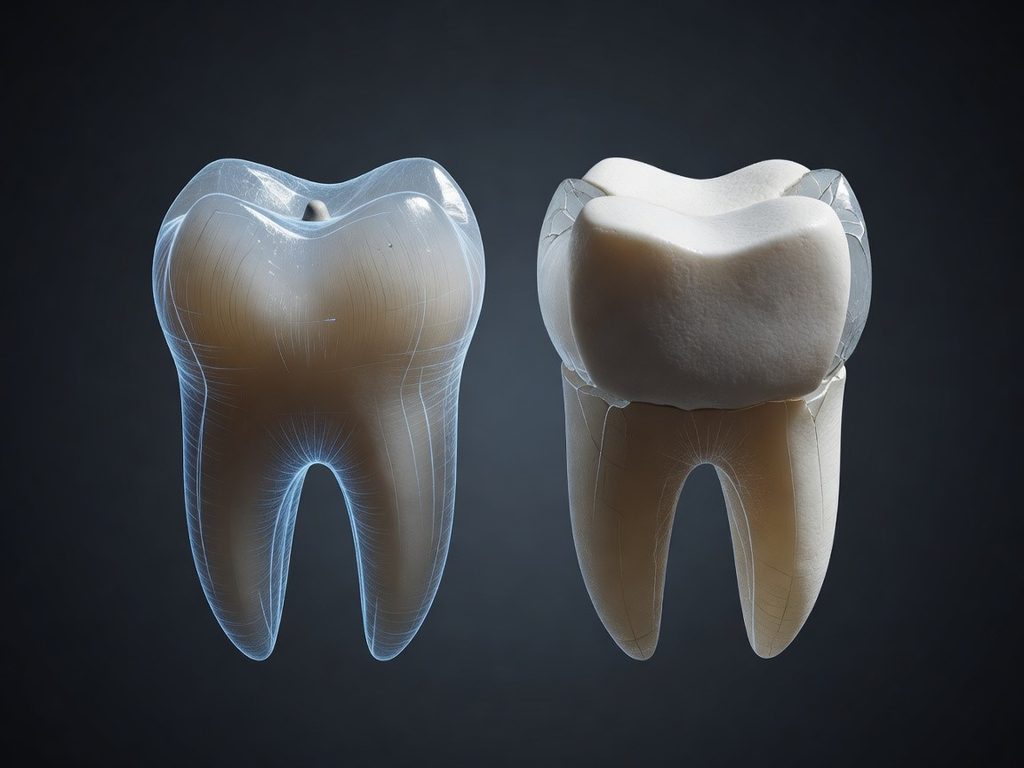
A filling replaces tooth material that decay or an old fracture already took away. It doesn’t restore the tooth to its original strength, not exactly. Think of a small filling, the kind that patches a pinpoint cavity between two molars, versus a large one that covers most of the chewing surface and wraps down the side. The small one leaves plenty of the tooth’s original architecture intact. The large one means the tooth is mostly held together by restorative material and whatever enamel walls remain standing.
That’s why two people can have fillings placed the exact same year and end up with wildly different outcomes twenty years later. One tooth still has enough of its own dental filling material and natural structure to shrug off normal chewing forces. The other has been quietly losing structural margin the whole time, and one bad bite on a piece of hard bread or a stray popcorn kernel is enough to crack it. Size, not age, tends to be the better predictor. A tooth that’s mostly filling is a tooth working with a smaller safety margin, plain and simple.
What Can Happen to a Tooth With a Large Old Filling?
Here’s where I’ll lay out the range of things that can actually go wrong, without pretending they’re inevitable, because they aren’t.
- The filling itself can wear or fracture. Amalgam fillings and composite fillings both take a beating from years of chewing. Metal fatigues. Composite chips at the edge. Either way, a cracked filling can expose parts of the tooth that used to be sealed off.
- The tooth around the filling can crack. This is the part people underestimate. Amalgam doesn’t chemically bond to tooth material the way composite resin does; it just sits mechanically wedged in place. Decades of thermal expansion and contraction from hot coffee, cold drinks, the whole cycle, put pressure on the remaining tooth walls like a slow-motion crowbar. Clinical write-ups on amalgam vs. composite performance back this up as a recognized mechanism, not internet folklore.
- New decay can sneak in at the edge. Margins degrade. A gap opens between the metal and the tooth, bacteria get curious, and recurrent decay develops somewhere you can’t see it forming.
- Or, honestly, the filling can still be totally fine. Plenty of decades-old restorations are doing their job with zero drama. The only way to know which category yours falls into is to have it looked at.
I’ll say this plainly because I think it needs saying: a filling that’s been quietly doing its job for twenty years without a single complaint isn’t secretly plotting against you. Some old silver fillings really are the strongest thing in someone’s mouth. But that survivorship doesn’t apply evenly, and that’s the whole point of paying attention rather than assuming.
Does an Old Filling Always Need to Be Replaced?
No, and I want to be blunt about that because it’s the misconception doing the most damage here. Regulatory guidance from the FDA on dental amalgam is explicit that intact, functioning silver fillings shouldn’t be pulled out just because they’re old or because someone read something alarming about mercury. The ADA backs the same position, noting that amalgam has a long track record of durability when it’s still structurally sound. Replacing a filling means removing more of the tooth’s own material to get the old restoration out, so doing that without a real clinical reason just trades one small risk for a bigger one.
What a dentist is actually weighing during an exam includes the integrity of the filling’s edge, whether the surrounding enamel shows signs of a crack, whether there’s evidence of decay creeping in underneath, and whether your bite has shifted in a way that’s putting new stress on that tooth. It’s condition and risk driving the decision, not the calendar. If your dentist wants to swap something out, ask what specifically they’re seeing. A good one will show you, not just tell you.
I’ll also add my own two cents here, because I’ve read through a fair number of patient discussions on this exact subject, and the sentiment that keeps surfacing is basically: don’t let a new dentist talk you into ripping out perfectly functional metal fillings just because composite looks nicer. If nothing hurts, nothing’s cracked, and the X-ray is clean, that’s not automatically a “let’s replace it” situation. Where I do think replacement earns its keep is when there’s an actual leak at the margin or visible decay creeping underneath. That’s not cosmetic anxiety, that’s a legitimate structural problem, and it’s worth acting on rather than sitting on for another five years hoping it resolves itself.
Signs Your Large Filling May Need to Be Checked
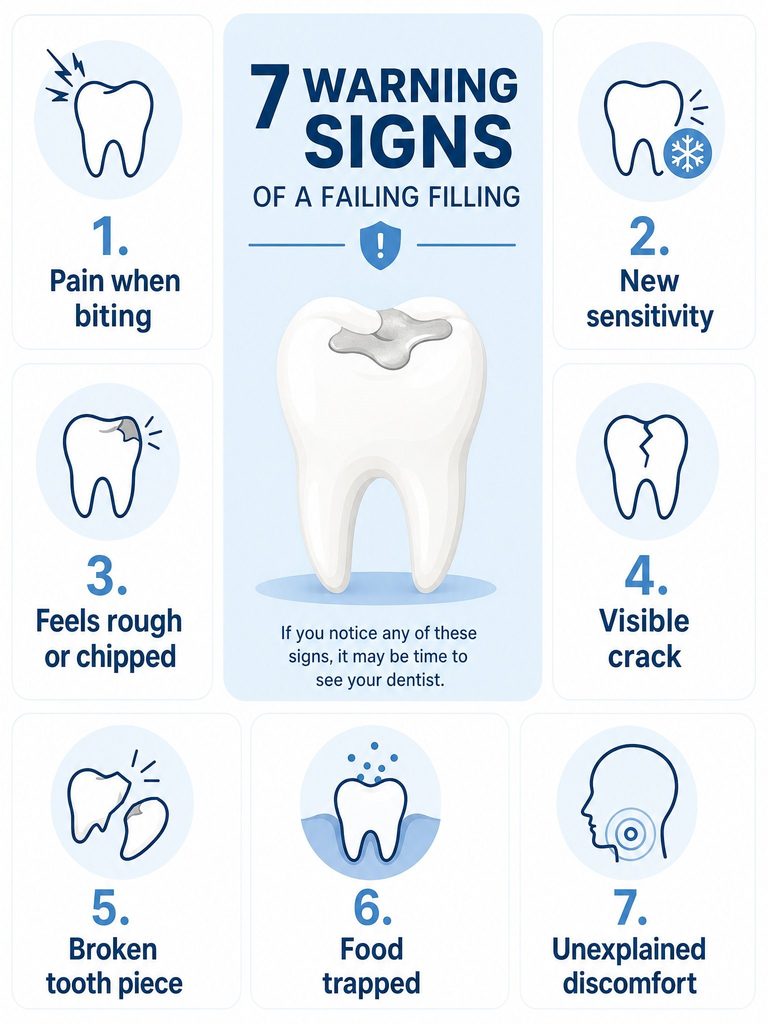
None of these symptoms diagnose anything on their own. They’re reasons to book an exam, not reasons to panic.
- Pain when biting down or chewing on that side.
- New sensitivity to hot or cold that wasn’t there before.
- A filling that feels rough, chipped, or just different under your tongue.
- A visible crack line in the tooth or the restoration itself.
- A piece of tooth actually breaking away.
- Food constantly getting trapped in the same spot.
- Discomfort in a tooth that’s been quiet for years.
A tooth that’s cracked around a filling doesn’t always announce itself with pain. Sometimes it’s just a weird sensation on release of a bite, or oddly enough, a tooth that’s sensitive to sweets but nothing else. That inconsistency is exactly why self-diagnosis rarely gets it right, and why a look with an explorer and a bitewing X-ray settles it faster than guessing.
What Is Silver Filling Replacement, Really?
“Silver filling” is just common shorthand for dental amalgam, a mix of metals that’s been used in restorative dentistry for over a century. Calling it silver doesn’t mean anything sinister is happening in your mouth, and it doesn’t mean the filling needs to go simply because of what it’s made of. Replacement becomes a real conversation when there’s a specific, identifiable problem with that restoration or the tooth around it, not because a patient prefers the color of composite. Depending on how much of the original tooth structure remains once the old material comes out, the replacement might be another direct filling, or it might need to be something with more coverage.
Filling, Onlay, or Crown: What Happens When More Structure Is Gone?
This is where the size conversation actually resolves into a decision. When enough healthy enamel and dentin remain around the old restoration, a straightforward filling replacement still makes sense. When the damage is more extensive but doesn’t require wrapping the entire tooth, a lab-made onlay can restore the chewing surface while sparing what’s still intact. And when a tooth has lost enough structure that its walls genuinely can’t support another filling reliably, that’s when a full crown enters the conversation, not as an upsell, but as the option that actually distributes chewing force safely.
| Situation | Likely Option | Why |
|---|---|---|
| Small area of new decay, plenty of tooth left | Filling replacement | Preserves maximum natural structure |
| Larger damage, cusp intact | Onlay | Covers more surface without full coverage |
| Extensive structure loss or crack risk | Crown | Wraps and protects remaining walls |
Data on multisurface restorations backs the caution around oversized composite fillings specifically; one clinical trial on restoration survival found large composite fillings carried a secondary decay risk roughly three and a half times higher than amalgam in comparable cavities. That’s not an argument against composite altogether, it’s an argument for matching the material and the approach to how much tooth is actually left.
How a Dentist Checks an Old, Large Filling
An assessment isn’t complicated. It usually involves a visual look at the filling’s edges and color, a gentle test with an explorer to feel for a step or a gap at the margin, a bite check to see if pressure on that tooth triggers anything, and an X-ray when there’s reason to suspect decay hiding beneath the surface where eyes can’t reach. Diagnostic approaches like these are outlined in clinical literature on identifying failing restorations, and honestly, it’s a pretty quick process compared to the anxiety people build up around it beforehand.
How to Protect a Tooth With a Large Filling
Basic habits do more heavy lifting here than people expect. Brush and clean between teeth like you actually mean it, keep up with routine dental cleanings so plaque doesn’t sit at that vulnerable margin, and don’t use your teeth as a bottle opener or a way to tear packaging (we’ve all done it, I’m not innocent either). If you grind or clench, especially at night, ask about a night guard, since that repetitive stress is exactly the kind of thing that turns a stable old filling into a cracked one. And if a filling ever feels chipped, rough, or off, don’t wait for pain to show up before getting it looked at.
When Should You Have an Old Filling Checked?
Book an assessment if you’re noticing new symptoms, if the filling looks visibly damaged, if a piece of tooth has broken off, or if it’s simply been years since anyone actually evaluated that specific restoration during a routine visit. A quiet filling with zero symptoms can still be worth a mention at your next cleaning. Age alone doesn’t demand treatment, but a long stretch without any real evaluation is worth closing.
Frequently Asked Questions
Do old fillings need to be replaced?
Not automatically. What matters is the condition of the restoration and the tooth structure around it, not the number of years it’s been in place.
Can a large filling cause a tooth to crack?
A heavily restored tooth simply has less natural structure left to absorb chewing forces, which raises the odds of a crack developing over time. That’s different from saying the filling itself directly causes the fracture.
Should I replace a silver filling with a white filling?
That decision should hinge on the tooth’s actual condition and functional needs, not just cosmetic preference for tooth-colored material.
Is a crown always needed after a large filling fails?
No. Depending on how much structure remains, a new filling or an onlay might do the job just as well.
Can a dentist tell if an old filling is failing?
es, through a combination of visual exam, a bite assessment, symptom review, and imaging when something looks questionable.
Read More Articles
Dental Crowns in South Holland, IL: Types, Costs, Timeline and What to Expect
Same-Day Crowns in South Holland: One Visit, No Temporary Crown
What a Dental Crown Costs in South Holland: 2026 Price Ranges by Material
Broken or Lost Crown? Emergency Crown Repair in South Holland
Replacing an Old or Failing Crown: When It’s Time and What It Costs
Getting a Crown at Dental Care 4U: What Happens at Each Visit
Crown or Extraction? How We Decide Whether a Tooth Can Still Be Saved
Will Your Plan Cover a Crown? How to Check Before You Book
Paying for a Crown Without Dental Insurance in South Holland
Front Tooth Crowns in South Holland: Getting the Colour and Shape Right
Crowns for Children and Teens: Stainless Steel and Tooth-Coloured Options
Porcelain vs Zirconia vs Metal Crowns: Which One Actually Lasts
Same-Day vs Lab-Made Crowns: What You Trade for the Speed
Filling, Onlay or Crown: How Much Damage Changes the Fix
Crown or Veneer: Which One Your Front Tooth Actually Needs
Crown or Implant: When to Save the Tooth and When to Replace It
How Long a Crown Takes, Step by Step
Do You Need a Root Canal Before a Crown?
How Long Crowns Last and What Shortens Their Life
Does Getting a Crown Hurt? What the Numbing and Recovery Actually Feel Like
Choosing a Dentist for Crown Work in South Holland: What to Ask First
Why Your Tooth Hurts When You Bite Down
Cracked Tooth Syndrome: The Pain That Comes and Goes
Why Teeth Break: Grinding, Age and the Foods That Do It
Crown, Cap, Onlay: What the Words Your Dentist Used Actually Mean
Signs a Tooth Needs More Than a Filling
Chipped a Tooth? What to Do in the First 24 Hours
Why a Crowned Tooth Can Still Get a Cavity