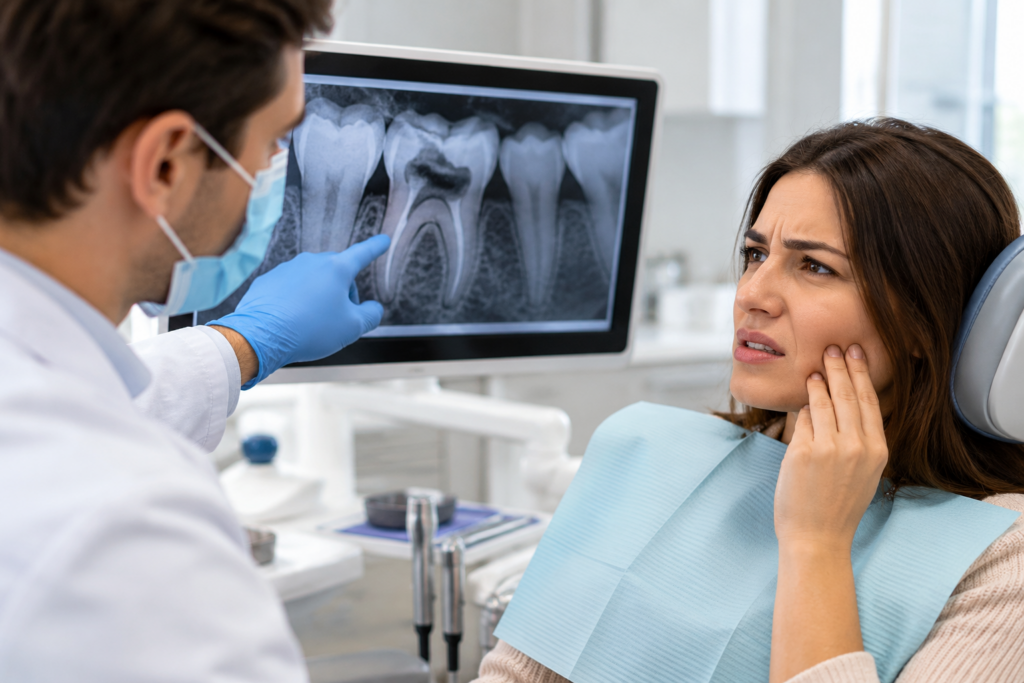
Key Takeaways
- A tooth with extensive decay, a crack, or a repeatedly failing filling may need more support than a simple filling can give.
- Bite pain, returning sensitivity, or visible damage deserve attention, but no symptom alone proves you need a crown.
- Getting the tooth assessed early clarifies your options before the problem grows.
You bit down on something ordinary, a bagel or a bit of ice, and felt that zing. Now you’re running your tongue over the same spot every few minutes, wondering if this is “just a filling thing” or something bigger.
Signs you need a crown tend to show up in a handful of ways: pain when chewing, a visible crack or broken cusp, a large filling that keeps failing, or very little healthy tooth left to hold a repair. But symptoms are clues, not a verdict. Only an exam can say whether a filling, an onlay, or a crown is the right call.
Signs a Tooth Needs More Than a Filling
Question: What Are the Signs That a Tooth Needs More Than a Filling?
Answer: A tooth may need more than a filling if it has extensive decay, a crack, a broken cusp, a large failing restoration, or too little healthy structure to support a simple repair. Warning signs include pain when chewing, recurring sensitivity, visible damage, or fillings that keep breaking or coming loose. None of these confirm a crown is necessary. A dentist has to examine the tooth to decide between a filling, onlay, crown, or another treatment. A visibly broken tooth, worsening pain, or swelling should be seen promptly, not left until the next routine check-up.
Why Might a Filling No Longer Be Enough?
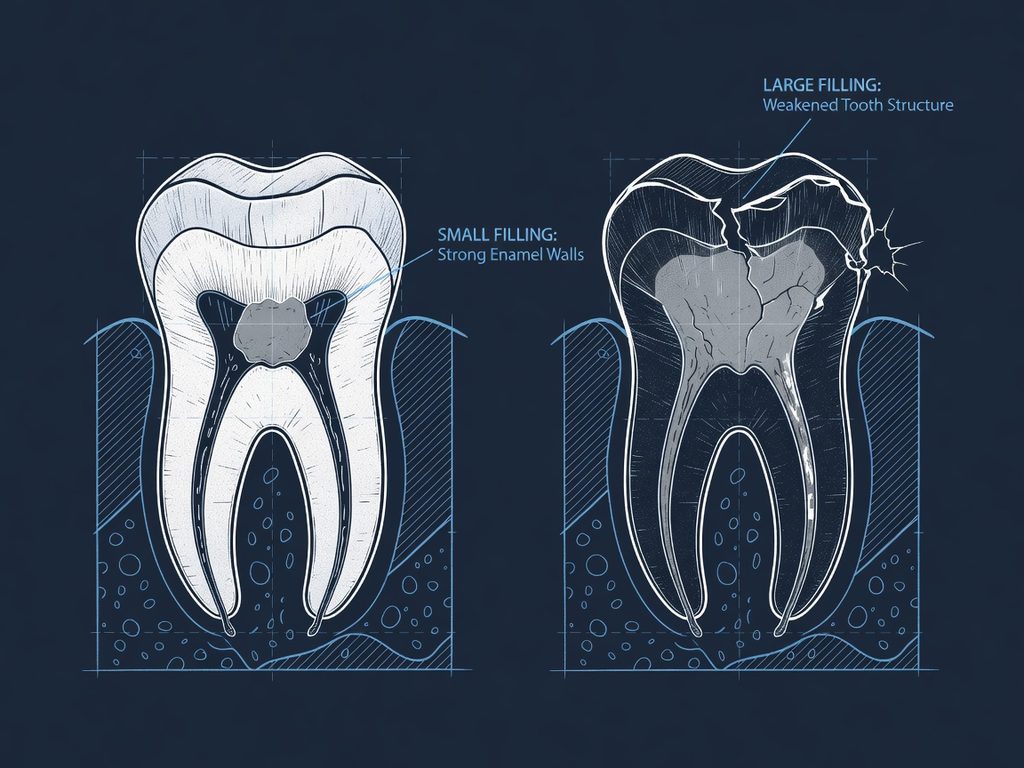
A filling patches a spot. That’s the whole job. Remove the decay, fill the hole, move on.
When is a filling not enough? Trouble starts when the spot gets big. Picture a small cavity, where plenty of strong enamel surrounds the repair and the filling just sits there quietly. Now picture a large filling, where the walls of the tooth have thinned out around it. Then picture a tooth with a weakened cusp, one of those pointed chewing peaks, hanging on by a thread of dentin.
Same material. Wildly different odds.
What the dentist weighs is how much healthy tooth remains and how hard that tooth has to work. Back teeth take hundreds of pounds of chewing force, which is why a molar and an incisor are judged differently. Sometimes the answer is an onlay or a crown that covers the weak part. Sometimes it’s still a filling. Not every big filling needs replacing, and not every cracked tooth ends up capped.
Seven Signs Your Tooth May Need More Than a Filling
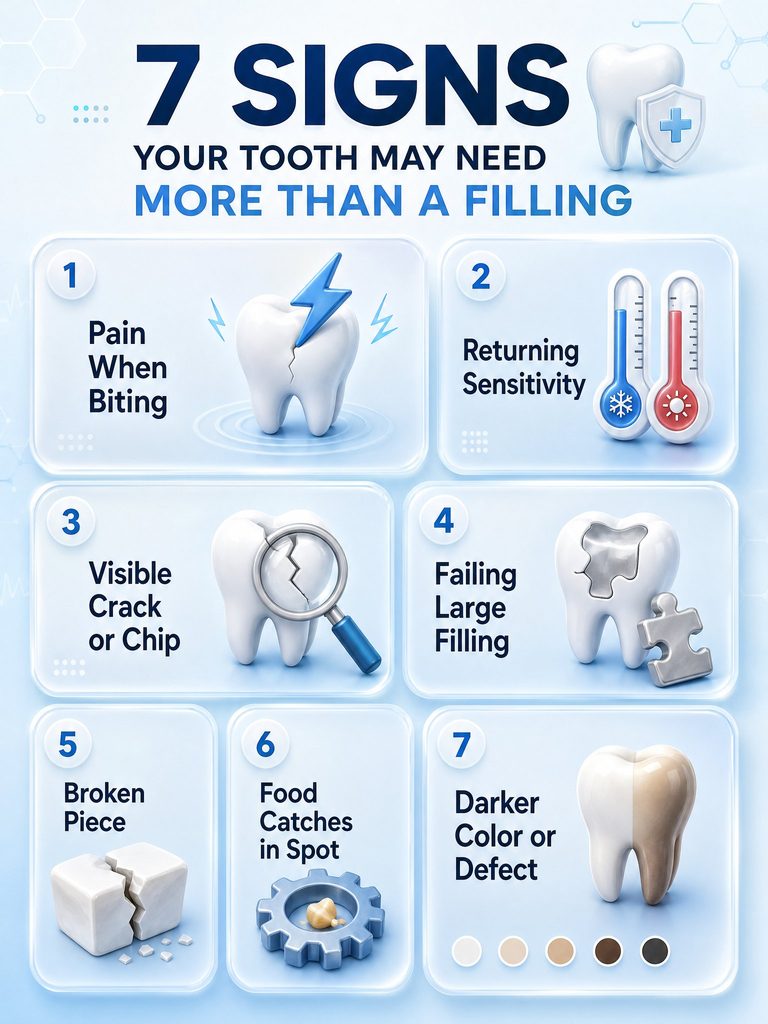
Think of this as a list of reasons to book an appointment. Not a self-diagnosis kit.
Pain When Biting or Chewing
Sharp pain on biting down can come from a crack, inflammation, decay, or a leaking restoration. Healthline notes that micro-fractures and failing margins can both trigger it. If it’s recurring, get it looked at.
Sensitivity That Keeps Returning
Hot, cold, or sweet sensitivity has plenty of causes. When it hangs around in one specific tooth, or gets worse, that’s your cue. It still can’t predict which restoration you’ll need.
A Visible Crack, Chip, or Broken Cusp
A tiny chip and a deep fracture are not the same animal. You can’t judge depth in a bathroom mirror, and honestly, neither can I. Let someone with magnification and good light do it.
A Large Filling or One That Keeps Failing
Big restorations can leave thin walls of natural tooth. Mayo Dental Clinic points to large failing amalgams with too little enamel left as a classic crown situation. But an old filling isn’t automatically a bad one. Loose, cracked, or repeatedly broken ones are the ones to flag.
A Piece of Tooth Has Broken Off
Severity varies, from a flake of enamel to a chunk. Call promptly, especially with pain, and stay off hard foods on that side until then.
Food Keeps Catching in the Same Spot
A damaged filling, a cavity, or a changed tooth shape can trap food. Worth checking. Not proof of a crown.
The Tooth Looks Darker or Has a New Defect
Staining, decay, or changes inside the tooth can all darken it. A color change alone can’t confirm weakness, but if it’s new or spreading, get an exam.
When Should You Call a Dentist Rather Than Wait?
Sooner than you’d like, usually. The temptation is to wait until the pain gets loud, and with a visibly broken tooth that’s backwards. Don’t hold out for severe pain.
Here’s a rough sorting guide. It can’t judge your particular tooth, so treat it as a starting point.
| Situation | Suggested next step |
|---|---|
| Visible break, lost filling, recurring bite pain, worsening sensitivity | Contact a dentist promptly |
| Severe or escalating pain, significant swelling, a substantial break | Seek urgent dental advice |
| Trouble breathing or swallowing, rapidly spreading facial or neck swelling, serious facial trauma | Seek emergency medical care |
Mild and steady symptoms? Still phone the office and ask about timing. “Months from now” is rarely the right answer. Medical Research lists spontaneous throbbing and an uneven bite among the red flags that point to deeper structural trouble.
Noticed a crack, a broken tooth, or a filling that keeps failing? Arrange an assessment.
Does Needing More Than a Filling Always Mean You Need a Crown?
When comparing a dental filling vs crown signs, the right treatment depends on how much of the tooth is damaged. A filling is usually enough for small cavities or minor damage when most of the natural tooth structure remains intact. However, a crown may be necessary if the tooth has a large cavity, extensive damage, cracks, or significant weakening from a previous filling. Signs that a tooth may need more than a filling include pain when chewing, sensitivity that persists, visible cracks, or a large portion of the tooth breaking off. Your dentist can examine the tooth and recommend the most appropriate treatment to restore its strength and function.
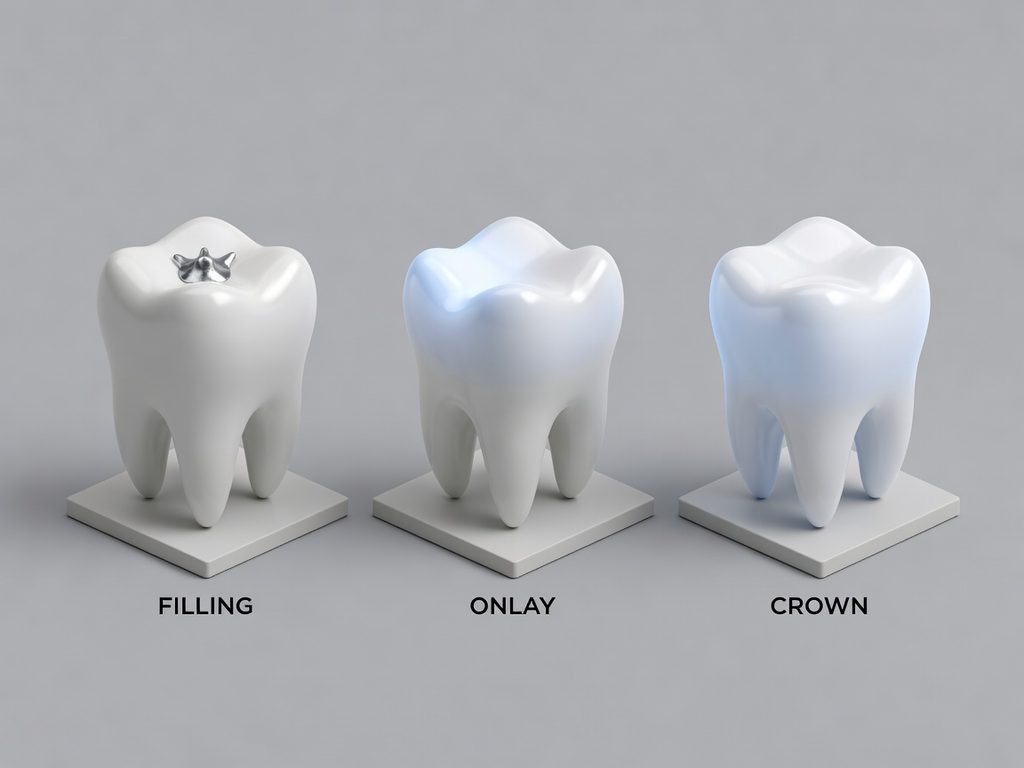
No. Flat out.
Treatment follows the type and extent of damage. If enough healthy structure remains, a filling may still do the job. An onlay can rebuild a damaged area and cover one or more cusps when a filling is too little but a full crown is too much. A crown wraps the whole visible portion of the tooth. And if decay or damage has reached the inner tissue, root canal therapy may enter the picture first.
That last scenario matters because 94% of dentists surveyed recommend a full-coverage crown on back teeth after endodontic treatment. Cracks can be trickier, and this JADA discussion of cracked-tooth syndrome shows how much judgment goes into choosing between a conservative fix and full coverage.
Your dentist should explain why they’re proposing what they’re proposing, and what the reasonable alternatives are. If you want to see how remaining tooth structure shapes those options, that’s the next thing to read.
A tooth needs crown symptoms if you experience pain when chewing, persistent sensitivity to hot or cold foods, visible cracks, or a large portion of the tooth breaking off. Other signs include a large cavity, a weakened tooth with an old or extensive filling, or a tooth that has undergone root canal treatment and needs additional protection. However, symptoms alone cannot determine whether you need a crown. A dentist can examine your tooth and assess the damage to decide whether a filling, onlay, or crown is the most appropriate treatment.
What Will the Dentist Check?
Less mystery than you’d think. Expect roughly this:
- Questions about your pain, sensitivity, chewing discomfort, and when it started.
- A close look at the tooth, the existing filling, the surrounding gum, and any visible damage.
- A bite check, plus an assessment of how much natural tooth is left.
- X-rays when clinically appropriate. They don’t show every crack, so a clean image isn’t a free pass.
- A conversation about whether a filling, onlay, crown, or something else fits.
Ask them to point to the problem area. A good dentist won’t mind.
Questions to Ask If You Think a Filling Isn’t Enough
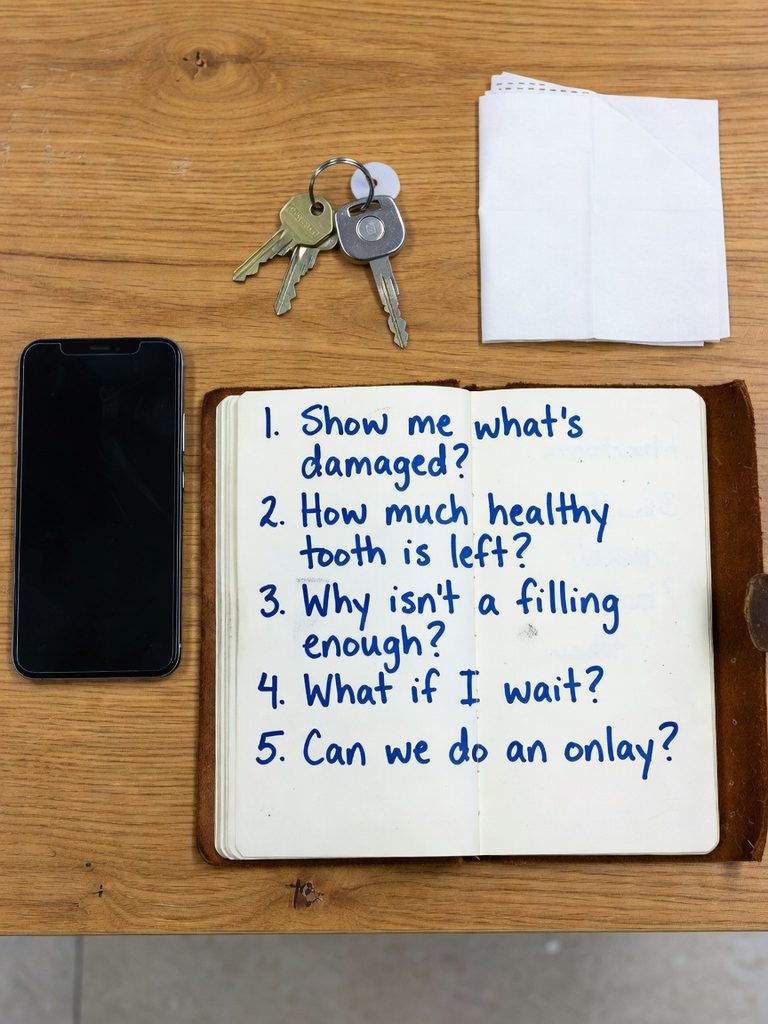
Screenshot these:
- “Can you show me what is damaged?”
- “How much healthy tooth structure remains?”
- “Why might a filling not be enough in my case?”
- “How soon should this be treated, and what could happen if I wait?”
- “Are there other suitable options, such as an onlay?”
That last one is the quiet hero. It tells the dentist you want to understand, not just agree.
Getting a Damaged Tooth Checked in South Holland, IL
If you’re local, don’t sit on a broken tooth or a symptom that keeps coming back. Dental Care 4 U in South Holland, IL can examine the tooth, explain what they find, and walk through your options without pressure. Guessing from a symptom list is a decent way to waste money, so let a real exam do the guessing for you.
Frequently Asked Questions
Can a tooth need a crown without hurting?
Yes. Cracks, decay, and weakened structure sometimes cause little or no pain. A quiet tooth isn’t necessarily a healthy one, so visible changes or worries about an existing restoration deserve an exam.
Does a large filling mean I need a crown?
Not necessarily. The tooth’s condition, the amount of healthy structure left, and the filling’s location all matter. Your dentist can say whether monitoring, a new filling, an onlay, or a crown makes sense.
Is pain when biting a sign I need a crown?
It can come from cracks, inflammation, decay, or other problems. It doesn’t prove you need a crown, but persistent or recurring pain should be checked.
Can a cracked tooth be fixed with a filling?
Limited damage sometimes can. Deeper cracks usually need something different. It depends on where the crack sits, how far it runs, and what’s left of the tooth.
How long can I wait if I think I need a crown?
There’s no universal safe window. A visible break, worsening pain, or swelling warrants prompt attention. Call your dentist for advice based on your symptoms rather than waiting for the next routine visit. If you do end up with one, Cleveland Clinic says crowns typically last 5 to 15 years, so it’s worth getting the decision right the first time.
Read More Articles
Dental Crowns in South Holland, IL: Types, Costs, Timeline and What to Expect
Same-Day Crowns in South Holland: One Visit, No Temporary Crown
What a Dental Crown Costs in South Holland: 2026 Price Ranges by Material
Broken or Lost Crown? Emergency Crown Repair in South Holland
Replacing an Old or Failing Crown: When It’s Time and What It Costs
Getting a Crown at Dental Care 4U: What Happens at Each Visit
Crown or Extraction? How We Decide Whether a Tooth Can Still Be Saved
Will Your Plan Cover a Crown? How to Check Before You Book
Paying for a Crown Without Dental Insurance in South Holland
Front Tooth Crowns in South Holland: Getting the Colour and Shape Right
Crowns for Children and Teens: Stainless Steel and Tooth-Coloured Options
Porcelain vs Zirconia vs Metal Crowns: Which One Actually Lasts
Same-Day vs Lab-Made Crowns: What You Trade for the Speed
Filling, Onlay or Crown: How Much Damage Changes the Fix
Crown or Veneer: Which One Your Front Tooth Actually Needs
Crown or Implant: When to Save the Tooth and When to Replace It
How Long a Crown Takes, Step by Step
Do You Need a Root Canal Before a Crown?
How Long Crowns Last and What Shortens Their Life
Does Getting a Crown Hurt? What the Numbing and Recovery Actually Feel Like
Choosing a Dentist for Crown Work in South Holland: What to Ask First
Why Your Tooth Hurts When You Bite Down
Cracked Tooth Syndrome: The Pain That Comes and Goes
What a Large Old Filling Does to a Tooth Over Time
Why Teeth Break: Grinding, Age and the Foods That Do It
Crown, Cap, Onlay: What the Words Your Dentist Used Actually Mean
Chipped a Tooth? What to Do in the First 24 Hours
Why a Crowned Tooth Can Still Get a Cavity