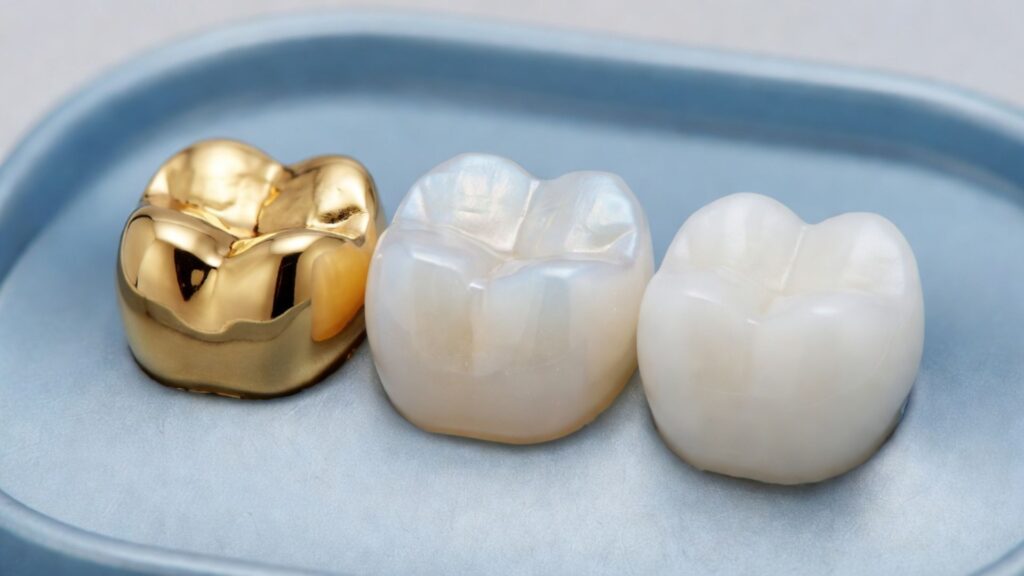
Somebody hands you a treatment plan with three crown options on it, and suddenly you’re supposed to know the difference between zirconia and porcelain like you’ve got a dental lab degree tucked away somewhere. You don’t. Nobody does, unless it’s their job.
Here’s the actual answer, stated plainly before anything else: monolithic zirconia crowns tend to hold up the longest under heavy bite force and are the toughest of the bunch, porcelain (specifically lithium disilicate, often branded as e.max) wins on looks for front teeth, and metal, the old noble alloy or gold crowns your grandfather probably has, still outlasts almost everything mechanically but nobody wants it flashing when they smile. That’s the short version.
The long version depends on which tooth we’re talking about, how hard you clench your jaw at 2 a.m., and honestly, how much you’re willing to spend.
I’ll say this upfront because it colors everything I write below: I lean zirconia. Not because it’s flashy or premium, it usually isn’t even the pricier lab option, but because in the real world, away from glossy brochures, it just fails less often in the ways that actually ruin someone’s week. That said, I’m not loyal to it blindly. If your tooth prep is deep and there’s not enough remaining structure to work with, zirconia can get bumped off the list fast, and that’s a conversation worth having with whoever’s holding the drill.
Key Takeaways
- Zirconia vs porcelain crown: Zirconia generally offers greater strength and durability, while porcelain—especially lithium disilicate—can provide a more natural-looking result for visible front teeth.
- Types of dental crowns: Common options include zirconia, porcelain or ceramic, and metal crowns. The right choice depends on the tooth’s location, bite force, remaining tooth structure, appearance, and grinding habits.
- Best material for dental crown: There is no single best material for everyone. Zirconia may be a strong choice for molars and heavy bite forces, while porcelain or high-translucency zirconia may be better when appearance is the priority. Zirconia crown cost can also vary by lab, location, and treatment complexity.
What Is the Best Material for a Dental Crown?
Question: What is the best material for a dental crown, zirconia or porcelain?
Answer: The best material depends on where the crown will be placed, how much bite force it will handle, how much healthy tooth structure remains, and how important appearance is. A zirconia vs porcelain crown comparison generally favors zirconia for strength and heavy chewing forces, while porcelain can offer excellent aesthetics for front teeth. Other types of dental crowns, including metal, may also be appropriate in certain cases. Zirconia crown cost varies based on the dental lab, location, and complexity of treatment, so cost should be considered alongside durability and appearance.
Dental Crown Materials at a Glance
Before wading into the weeds, let’s just look at the numbers side by side. Flexural strength, in dental material science, basically measures how much force a material can absorb before it cracks under bending load. It’s not a perfect stand-in for real-world durability, but it’s the closest thing we’ve got to an apples-to-apples comparison.
| Factor | Zirconia (Monolithic) | Porcelain / Lithium Disilicate | Metal (Noble Alloy/PFM) |
|---|---|---|---|
| Flexural strength | 900–1,400 MPa | 350–500 MPa | High, varies by alloy composition |
| Tooth prep required | Conservative, roughly 0.5mm | More aggressive, 1.5–2.0mm | Moderate |
| Best suited for | Molars, bruxism cases | Front teeth, visible smile zone | Back teeth, less visible areas |
| Typical lifespan | 15–25+ years | 10–15 years | Often decades |
| Opposing tooth wear | Low when polished | Moderate, can be abrasive | Low |
A multi-year clinical review pooling data from 66 studies puts single zirconia crown survival somewhere between 92.9% and 98.7% across a ten-year window, which is a pretty strong track record for a material that used to get dismissed as “the strong but ugly one.”
Porcelain and Ceramic Crowns: Best for a Natural Look?
Porcelain earned its reputation the honest way, through decades of dentists watching it mimic enamel better than anything synthetic has managed since. It’s got translucency, that slight glow when light hits it, that opal-ish quality real teeth have. Zirconia has gotten better at faking that glow, but ask most cosmetic dentists and they’ll still hand the crown to porcelain when a front tooth is the target.
The tradeoff shows up the moment bite force enters the picture. Traditional feldspathic porcelain, layered onto a stronger core, can chip or crack under repetitive chewing stress, especially on molars where the pressure runs higher. That’s not a design flaw exactly, it’s just physics. A material engineered for optical beauty rarely wins the strength contest too. Independent cosmetic boards keep noting that all-ceramic formulations still deliver the closest match to natural fluorescence, which is a fancy way of saying your crown won’t look chalky or dead under bathroom lighting.
Good fit when:
- The tooth is in the visible smile zone, meaning front incisors or canines
- Shade matching to neighboring natural teeth is a priority
- Bite forces on that particular tooth are moderate, not extreme
- You’re not someone who grinds their teeth at night
Not every ceramic is created equal, either. “Porcelain” gets used loosely, but lithium disilicate, feldspathic porcelain, and pressed ceramics all behave differently under stress. That distinction actually matters more than most patients realize when a dentist explains why one option got recommended over another.
Zirconia Crowns: Strength Without Giving Up the Tooth-Colored Look
Zirconia is a ceramic, technically zirconium dioxide, but it doesn’t act like the porcelain of decades past. It behaves more like a ceramic wearing armor. That’s the whole appeal. You get a tooth-colored restoration that can absorb the kind of chewing force that would chip a traditional crown clean off.
Clinical literature backs this up pretty firmly. Researchers studying zirconia’s structural resilience point out it can absorb heavy masticatory forces, sometimes upward of 250 pounds on molars, without fracturing the way older ceramics did. That’s not a marginal improvement, that’s a different category of durability.
Myth: the strongest crown is automatically the best crown. Reality: strength is one variable among several. A molar that grinds against its neighbor all night needs different priorities than a front tooth that just needs to look right in photos.
There’s also a persistent worry that zirconia, being so hard, chews through opposing natural teeth like sandpaper. Turns out that fear was overstated. A study on enamel wear from polished zirconia found that when zirconia is properly polished rather than left rough, it actually causes less wear on opposing enamel than traditional veneering porcelains do. Traditional porcelain, ironically, has historically been the more abrasive of the two.
Where zirconia gets ruled out is prep depth. If there isn’t enough remaining tooth structure, or if the case calls for a very thin restoration, zirconia’s mechanical advantages stop mattering because there’s no room to use them properly. That’s the caveat I keep coming back to. Hype aside, the material has to fit the actual mouth in front of it.
Metal Crowns: The Old-School Option That Still Has a Place
Nobody’s excited about a metal crown showing up in their smile, and that’s fair. But dismiss the material entirely and you’re ignoring decades of quiet, unglamorous reliability. Noble alloy and gold crowns have been sitting in molars for thirty, forty years without drama, mostly because metal simply doesn’t chip, crack, or wear the way ceramics can.
That durability comes with the obvious drawback: it looks like metal. For a back molar nobody sees when you laugh, that’s a non-issue. For anything near the front of the mouth, it’s usually a dealbreaker. Metal allergies, particularly nickel sensitivity, occasionally come up too, and it’s worth mentioning to whoever’s doing your treatment plan if you’ve had reactions to costume jewelry or watch bands before.
Which One Actually Lasts the Longest?
Here’s where I have to slow down, because the honest answer isn’t as tidy as a chart makes it look. Material strength and real-world crown longevity are related, but they’re not the same conversation.
A systematic review of failure modes in porcelain-veneered zirconia found chipping rates between 6% and 15% over three to five years, compared to 4% to 10% for traditional metal-ceramic crowns over a full decade. That gap matters, but it also gets swallowed up by other variables entirely outside the material itself.
What actually determines whether a crown survives:
- Whether you grind or clench at night, quietly wearing down anything in your mouth regardless of what it’s made of
- How much healthy tooth structure remained before the crown went on
- Whether the crown margin fits tightly against the gumline, preventing bacteria from sneaking underneath
- Basic daily habits, flossing around the crown edge, showing up for cleanings, not using your teeth as bottle openers
A retrospective study comparing five-year outcomes actually found zirconia restorations showed lower inflammation and shallower gum pockets than PFM crowns, but slightly more gingival recession over time. No material sails through untouched.
Choosing by Tooth, Bite, and Budget
If the tooth is front and center, porcelain or a high-translucency zirconia usually enters the conversation first, because appearance carries more weight there than raw strength. If it’s a molar doing heavy lifting three times a day, zirconia or metal tends to get discussed instead, since durability outranks aesthetics in a spot nobody sees anyway.
Grinding changes everything. If you clench, mention it before the material conversation even starts, because it can shift the entire recommendation regardless of which tooth is involved.
Cost, frankly, is where things get murky, and I’d rather be honest than make up numbers. Zirconia crown cost and porcelain crown pricing both vary by lab, region, and complexity, and neither material is reliably cheaper across the board. What’s often left out of the “zirconia is premium” pitch is that it’s frequently less expensive to mill and produce than layered porcelain, so treat marketing language around “luxury materials” with a healthy dose of skepticism.
FAQ
Is zirconia stronger than porcelain? Generally, yes, in flexural strength testing zirconia outperforms traditional porcelain by a wide margin. But strength alone doesn’t decide which crown is right for a given tooth.
What’s the best material for a dental crown overall? There isn’t one universal answer. It depends on tooth location, bite force, remaining tooth structure, and how much appearance matters to you personally.
How long should a crown actually last? Many crowns last well over a decade, some two or three, but oral hygiene, grinding habits, and fit matter more than the material label stamped on the lab report.
Does zirconia cost more than porcelain? Not necessarily. Lab fees for zirconia are often comparable to or lower than layered porcelain, despite the perception that it’s the premium choice.