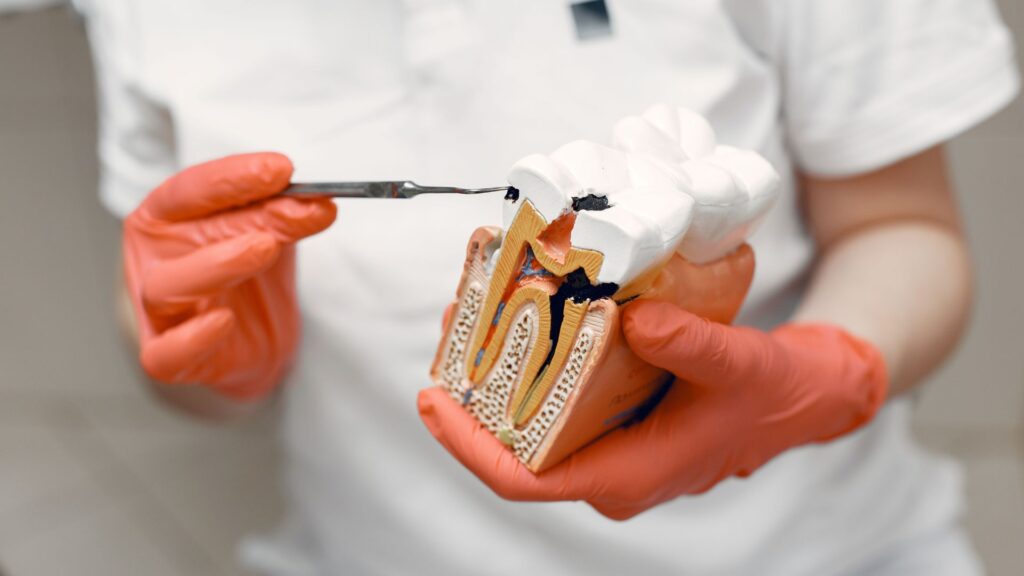
No, getting a crown doesn’t automatically mean you need a root canal first. That’s the short version, and if you clicked on this because a dentist just handed you a treatment plan with both procedures listed and you’re wondering if you’re being upsold, I get it. But the truth is messier and more specific than a simple yes or no. A root canal and a crown solve two completely different problems, and whether your tooth needs one, the other, or both depends entirely on what’s actually going on inside and outside that particular tooth. Not some blanket rule dentists follow to pad a bill.
Let’s untangle this properly.
Key Takeaways
- A root canal and crown treat different problems. Root canal therapy addresses infection or disease inside the tooth, while a crown restores and protects damaged tooth structure.
- You don’t automatically need a root canal before a crown. Whether you need both procedures depends on the health of the tooth’s pulp, the amount of remaining tooth structure, and the findings from your exam and diagnostic testing.
- A crown after root canal treatment may help protect a weakened tooth. The need for a crown depends on factors such as how much tooth structure remains and where the tooth is located. If you’re considering root canal treatment South Holland, ask your dentist to explain why each procedure is recommended for your specific tooth.
Do I need a root canal before a crown?
Question: Do I need a root canal before a crown?
Answer: No, you do not automatically need a root canal before getting a crown. A root canal treats problems inside the tooth, such as an infected or irreversibly inflamed pulp, while a crown restores and protects damaged tooth structure. If the pulp is healthy, a dentist may be able to place a crown without root canal therapy. When a tooth does have a diseased or infected nerve, root canal treatment may come first, followed by a crown after root canal therapy when additional protection is needed. The recommended sequence should be based on an examination, diagnostic testing, and X-rays rather than a standard rule that every crown requires a root canal.
Root Canal vs Crown: What Does Each Treatment Actually Do?
Think of your tooth like a house. The pulp is the plumbing and electrical wiring buried inside the walls. The crown is the roof and siding. If your pipes burst, replacing the roof doesn’t fix the leak. And if your roof is caving in, fixing the pipes won’t stop the rain from coming through. Two different systems, two different failure points, two different fixes.
What a root canal treats
A root canal, more formally called root canal therapy, deals with what’s happening inside the tooth. When the dental pulp (that’s the soft tissue packed with nerve endings and blood vessels sitting in the center of your tooth) becomes irreversibly inflamed or infected, usually from deep decay, a cracked tooth, or repeated dental work on the same spot, that tissue has to come out. The American Association of Endodontists explains the biological rationale pretty plainly: the dentist removes the diseased pulp, cleans and shapes the canals, then seals the space so bacteria can’t move back in. The whole point is keeping a tooth that would otherwise need extraction. It’s a rescue mission, not a cosmetic upgrade.
What a crown treats
A crown is a cap, usually porcelain or a porcelain-metal hybrid, that gets placed over a tooth that’s lost enough structure to need full coverage. Maybe there’s a large old filling that’s failing. Maybe a fracture runs partway down the tooth. Maybe decay ate through so much of the original structure that a regular filling won’t hold up under chewing pressure anymore. A crown restores shape and function, and it protects whatever natural tooth remains from splitting further. Here’s the part people miss: a crown does nothing for an infected or dying nerve. Zero. If the pulp is the problem, a crown sitting on top of it is like putting fresh paint on a house with a gas leak.
| Root Canal | Crown |
|---|---|
| Treats the inside of the tooth | Restores and protects the outside of the tooth |
| Addresses pulp-related disease or infection | Addresses structural or restorative needs |
| Lets a tooth stay in the mouth instead of being pulled | Reinforces what’s left after decay, fracture, or old dental work |
| Sometimes comes before a crown | Sometimes follows a root canal, sometimes doesn’t |
Why Would You Need a Root Canal Before a Crown?
So why would a dentist ever say “root canal first, then we’ll talk crown”? Because slapping a crown over a tooth with a diseased nerve doesn’t make the disease disappear. It just seals it in. Harbour Dental Care makes this point bluntly: placing a crown over an infected tooth traps bacteria, and that trapped infection tends to turn into an abscess down the line, usually at the worst possible time.
A few clinical findings tend to push a root canal ahead of a crown on the treatment plan:
- Evidence of irreversible pulpitis, meaning the nerve tissue is inflamed beyond the point of healing on its own.
- Signs of infection at the root tip visible on an X-ray, sometimes with no pain at all.
- A cavity or fracture that’s extended deep enough to expose or threaten the pulp chamber.
- Diagnostic testing (temperature sensitivity, percussion testing, imaging) that shows the pulp can’t be reasonably saved without intervention.
The logic follows a sequence: diagnose what’s happening inside the tooth, treat the pulp problem if one exists, then restore and protect whatever structure is left. As Eastern Idaho Endodontics frames it, the root canal is required when the tooth’s nerve is diseased, painful, or infected, specifically to clean out and seal the interior canals before anything else gets built on top. The root canal isn’t being recommended because you need a crown. It’s addressing a separate problem that happens to be sitting in the same tooth.
Does Every Crown Need a Root Canal?
No. Flat out, no. This is probably the single most important thing to walk away with, so let me say it plainly: a crown does not require a root canal by default. Plenty of teeth get crowned every single day with a completely healthy, vital nerve tucked inside.
Crowns get placed without any endodontic treatment in situations like these:
- A tooth has a large fracture or significant wear, but pulp testing shows the nerve is alive and responding normally.
- An old, oversized filling is failing structurally, and the tooth needs full coverage even though there’s no infection present.
- A tooth has cosmetic or bite-related issues requiring a crown, with the underlying tooth structure otherwise sound.
I’ll be blunt about something else here. You cannot diagnose your own pulp health from a symptom checklist. Pain doesn’t automatically mean infection. No pain doesn’t automatically mean you’re in the clear (some infected teeth are eerily quiet). Sensitivity to cold, or a tooth that’s gone slightly gray, doesn’t settle it either. This is exactly the kind of judgment call that requires a clinical exam and proper diagnostic testing, not a Google search at 11pm.
Myth: If you need a crown, you automatically need a root canal. Fact: They address different problems entirely. Some teeth need both procedures. Plenty need only the crown.
What Happens When the Root Canal Comes First?
When a root canal does need to happen first, the sequence usually looks something like this: your dentist evaluates the tooth and confirms the diagnosis, performs the root canal procedure to clean out and seal the canals, restores the access opening (often with a filling material to hold things together temporarily), then moves toward crown planning once the tooth has settled.
That gap between root canal and final crown isn’t arbitrary. It shifts depending on how much natural tooth structure survived, whether a core buildup is needed to give the crown something to grip onto, what kind of temporary restoration is holding the fort in the meantime, and honestly, just the dentist’s read on how the tooth is healing. Some practices offer same-day crown technology using in-office milling, which can shrink that window considerably. Others prefer a multiple-visit approach with a lab-fabricated crown, especially if there’s more rebuilding work involved. Neither is inherently wrong; it depends on the case.
Why a Root-Canal-Treated Tooth May Need a Crown
Flip the question around. If the root canal already fixed the infection, why does the tooth need a crown on top of that?
Because the root canal only ever addressed the internal problem. It didn’t put back any of the tooth structure that decay, fracture, or repeated drilling already took away. If a molar walked into that root canal procedure missing a third of its original bulk, it walks out the same way, minus the infected pulp, but structurally no stronger than before. SV Endodontics puts it well: a crown gets placed weeks after a root canal specifically to protect the remaining brittle tooth structure from fracturing under normal chewing forces. I want to be careful here though. Not every root-canaled tooth turns instantly fragile. The actual need for a crown depends on how much structure survived, where the tooth sits in your mouth, and what kind of forces it deals with daily.
That last part matters more than people realize. Back teeth, your molars and premolars, absorb enormous chewing pressure, sometimes over 150 pounds of bite force on a molar. That’s genuinely why crowns get recommended on back teeth after root canal therapy almost as a rule. Front teeth face a fraction of that pressure, so a bonded composite filling is often perfectly adequate there instead, according to SV Endodontics research on restoration choices.
I’ll admit, my own bias leans pro-crown on molars specifically because I watched a friend treat a root-canaled back tooth like the job was finished, skip the crown, and keep pushing off the final restoration. Nothing dramatic happened for months. Then it cracked at the gumline, mid-bite, over dinner. What could’ve been a straightforward crown appointment turned into a much bigger, much more expensive conversation about whether the tooth was even salvageable anymore.
When a Crown May Come Without a Root Canal
The reverse pathway exists too, and it’s worth knowing about because it cuts against the idea that root canals and crowns always travel together. Sometimes a tooth has taken serious structural damage, maybe a large old crown that’s failing, maybe significant decay around the edges, but the pulp underneath tested out healthy. In that scenario, a dentist can move straight to a crown without touching the nerve at all, treating pulp preservation as part of a more conservative approach to the tooth.
One caveat worth sitting with: choosing to skip a root canal now doesn’t guarantee the pulp stays healthy forever. Teeth change. A nerve that tests fine today can become inflamed years down the line from new decay, a fresh crack, or just wear and tear catching up with it. That’s not a failure of the original treatment decision. It’s just how natural teeth behave over time.
Signs Your Dentist Should Explain the Root Canal Recommendation
If you’re staring at a treatment plan feeling suspicious, don’t just swallow it or storm out. Ask better questions instead. A dentist worth trusting should be able to walk you through:
- What did the X-ray actually show?
- Was pulp testing performed, and what were the results?
- Is the nerve currently healthy, inflamed, or infected?
- Is this recommendation based on symptoms, imaging, testing, or some combination?
- What happens if we place the crown without treating the pulp first?
- Is there a reasonable alternative worth discussing?
- What’s the prognosis with treatment versus without it?
None of this is about rejecting your dentist’s judgment wholesale. It’s about asking, “Can you show me what you’re seeing, and explain how that changes the plan?” Research published through NCBI on coronal leakage and microbial recontamination backs up why timing and sequencing actually matter clinically, not just financially. A dentist who can answer these questions clearly, using the actual imaging in front of you, isn’t stalling. That’s what good clinical communication looks like.
Can You Wait on a Root Canal Before Getting a Crown?
Sometimes. It depends entirely on the diagnosis, and I’d rather not throw around scare tactics here. If there’s active infection or significant symptoms, delaying isn’t a great idea; untreated dental infection doesn’t just sit still, and pain fading away doesn’t necessarily mean the underlying problem resolved itself. Sometimes it just means the nerve finally died, which is worse, not better. A temporary restoration can buy time in some staged treatment plans, but the real question to ask your dentist is simple: how urgent is my specific situation, and what happens if I wait two weeks versus two months?
Root Canal Treatment in South Holland, IL
If you’re located in south suburban Cook County and searching for root canal treatment in South Holland, the same principle applies locally as it does everywhere else: the sequence should be dictated by what’s actually happening in your tooth, not a default script. A practice like Dental Care 4 U, where Dr. Raj Khurana treats patients throughout South Holland, IL, should be willing to sit down with your X-ray and explain exactly why root canal therapy, a crown, or both are being recommended for your specific case. That kind of transparency is what separates a rushed sales pitch from an actual clinical explanation, and it’s worth asking for directly if you’re evaluating a dentist in South Holland for this kind of work.
Bottom Line: Ask Why You Need Each Treatment
A root canal and a crown are not interchangeable, and one doesn’t automatically trigger the other. Some teeth genuinely need both procedures done in sequence. Others need only the crown, with a perfectly healthy nerve left untouched underneath. The question worth asking isn’t “do people usually get both?” It’s “what’s actually happening inside my specific tooth that makes each step necessary?” Ask to see the X-ray. Ask about the diagnosis, the prognosis, and whether a reasonable alternative exists. Don’t stall on treatment purely because two procedures on one invoice feels like an upsell; sometimes it genuinely is what the tooth needs.
Ask us to explain why your specific tooth needs each step. We’ll show you the X-ray.
FAQ
Do you always need a root canal before a crown? No. A crown can sometimes be placed on a tooth with a healthy nerve. A root canal only gets recommended when the condition of the pulp actually warrants that treatment.
Why do I need a crown after a root canal? The root canal fixes what’s happening inside the tooth. A crown may then be needed to restore and protect a tooth that’s lost substantial structure or needs full coverage to survive normal chewing forces.
Can a crown cause the need for a root canal? Not directly. But a tooth can develop pulp problems before or after restorative work for unrelated reasons, and the specific clinical picture determines whether root canal therapy becomes necessary.
How long after a root canal can you get a crown? It varies. Some teeth move toward final restoration fairly quickly, sometimes with same-day crown options. Others need additional evaluation, a core buildup, or healing time before the permanent crown goes on.