Your tooth hurts when you bite down, and the strange part is it feels almost normal otherwise. That gap between “fine when resting, awful when chewing” is not random. It usually points to something specific happening at the moment force gets applied, whether that’s a crack catching light pressure or a nerve center reacting to something deeper. The causes range from a hairline fracture to a filling that’s shifted your bite, to decay quietly working through enamel and into dentin. No single symptom confirms a diagnosis here. What matters is the pattern, and a dentist is the one who connects that pattern to an actual cause.
Bite-specific pain deserves attention, but not panic. If the same tooth keeps hurting every time you chew on that side, don’t just wait it out for months hoping it resolves itself. That said, one twinge after biting into a stale bagel isn’t a five-alarm fire either. There’s a middle ground between ignoring it and catastrophizing it, and this article lives there.
Key Takeaways
- Tooth pain when biting or chewing can have several causes, including cracks, decay, damaged fillings, bite-related stress, or irritation around the tooth.
- A tooth that hurts only under pressure still deserves attention if the symptom keeps returning, becomes more intense, or lingers after eating.
- Pain alone cannot confirm the cause or treatment. A dental exam can help determine whether the problem involves the tooth structure, filling, bite, surrounding tissue, or pulp.
Why Does My Tooth Hurt When I Bite Down?
Question: Why does my tooth hurt when I bite down?
Answer: A tooth hurts when you bite down because pressure may be stressing a weakened or irritated part of the tooth or the tissue around it. Possible causes include a cracked or damaged tooth, tooth decay, a damaged or loose filling, bite-related stress, gum or ligament irritation, or inflammation inside the tooth. Pain when chewing does not automatically mean you need a root canal or crown. If the same tooth repeatedly causes tooth pain pressure or discomfort when you chew, a dentist can examine the tooth, check your bite, and use X-rays or other testing when needed to identify the cause. If you’re wondering, why does my tooth hurt, especially when biting or chewing, the pattern of the pain can provide clues, but an exam is needed for a diagnosis.
Why Does a Tooth Hurt Only When You Bite Down?
Biting is a mechanical event. Force travels through the crown, into any filling or restoration sitting in there, down through the tooth structure, and into the ligament and bone supporting the root. If any part of that chain has a weak spot, pressure exposes it. A tooth can sit there quietly all day, feeling like nothing’s wrong, then complain the instant you press down on a piece of steak.
This is why dentists care so much about when pain shows up. Pain at rest, meaning discomfort with no chewing or touch involved, points somewhere different than pain triggered specifically by biting. Temperature pain, the kind that flares with hot coffee or cold ice cream, is its own category tied to dentin exposure or pulp irritation. Then there’s release pain, an odd but telling symptom where the ache hits after you let go of the bite rather than during it, which is a classic sign the American Association of Endodontists associates with certain structural issues inside the tooth.
None of these patterns hand you a diagnosis on a silver platter. What your pain pattern tells you is where to look, not what you’ll find.
| Pain Pattern | What It May Suggest |
|---|---|
| Hurts only when biting | Pressure-related issue: crack, restoration problem, or bite stress |
| Hurts when releasing bite | Often linked to structural tooth issues, worth mentioning to a dentist |
| Hurts with hot or cold | Dentin exposure or pulp sensitivity, different mechanism than bite pain |
| Constant, unprovoked ache | May suggest deeper nerve or root involvement |
Common Reasons Your Tooth May Hurt When You Bite
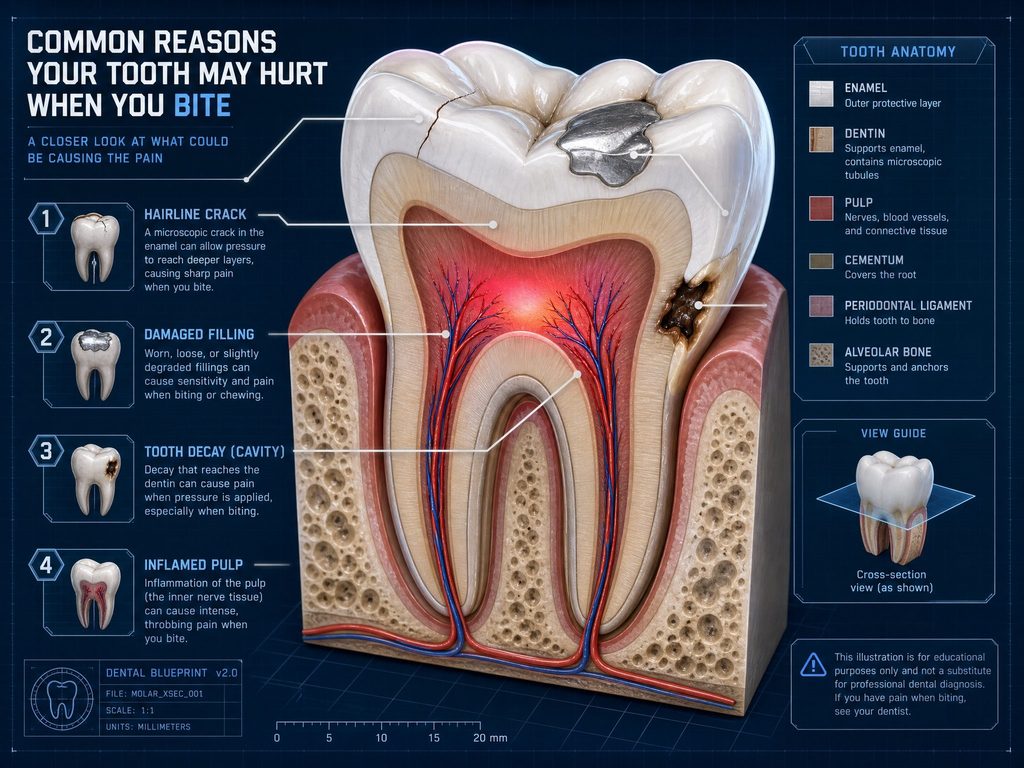
A Cracked or Damaged Tooth
A crack running through a cusp can cause sharp, specific pain the second you clamp down, especially if that crack flexes under pressure and irritates tissue underneath. The tooth might feel completely normal between bites. Some cracks are microscopic, invisible without magnification or transillumination, tools the AAE outlines in its clinical crack detection protocol. I’ll say this plainly though: bite pain does not automatically mean you’ve got a cracked tooth. It’s one possibility among several, and figuring out what cracked tooth syndrome actually looks like requires an exam, not a guess based on a single symptom.
Tooth Decay or a Weakened Tooth
Decay eats away at structural integrity long before it announces itself with pain. A cavity that’s progressed enough to weaken the tooth wall can make chewing genuinely uncomfortable, while early-stage decay might produce almost nothing noticeable. Pain level, frankly, is a poor gauge of how bad the damage actually is. Some people walk around with a large cavity and barely feel it until they bite into something firm. That mismatch between symptom and severity is exactly why an exam and X-rays matter more than self-assessment.
A Damaged or Loose Filling
Old fillings wear down, crack at the edges, or shift the way your teeth meet when you close your mouth. A patient once told me something like, “My tooth felt fine for years, then started hurting when I chewed after a filling changed,” and that’s a pretty common story. It doesn’t mean every old filling needs to be ripped out and replaced. It means the restoration and the bite need a look, because sometimes it’s not the filling material failing, it’s the contact point throwing off how force distributes across the tooth.
Irritation Around the Tooth
Sometimes the tooth itself is fine and the problem lives in the tissue around it. Gum inflammation, minor trauma, or grinding habits can irritate the ligament holding a tooth in its socket, and that irritation flares under pressure. This overlaps with broader gum health concerns tracked on resources like MouthHealthy’s jaw and bite pain index. It’s genuinely hard for a patient to tell the difference between “it’s the tooth” and “it’s the tissue around the tooth” without someone checking both.
A Problem Inside the Tooth
Every tooth has a nerve center, the pulp, sitting inside a hollow chamber surrounded by dentin. When that pulp gets irritated by deep decay, trauma, or a cracked tooth left unaddressed, it can become inflamed in a way described clinically as pulpitis, which the Merck Manual details as a progression from mild sensitivity to sharp, pressure-triggered pain. Root canal treatment sometimes becomes appropriate here, but bite pain by itself doesn’t mean you’re headed for one. If it turns out the pulp is involved, understanding root canal treatment ahead of time takes some of the mystery out of it.
What Different Pain Patterns May Mean
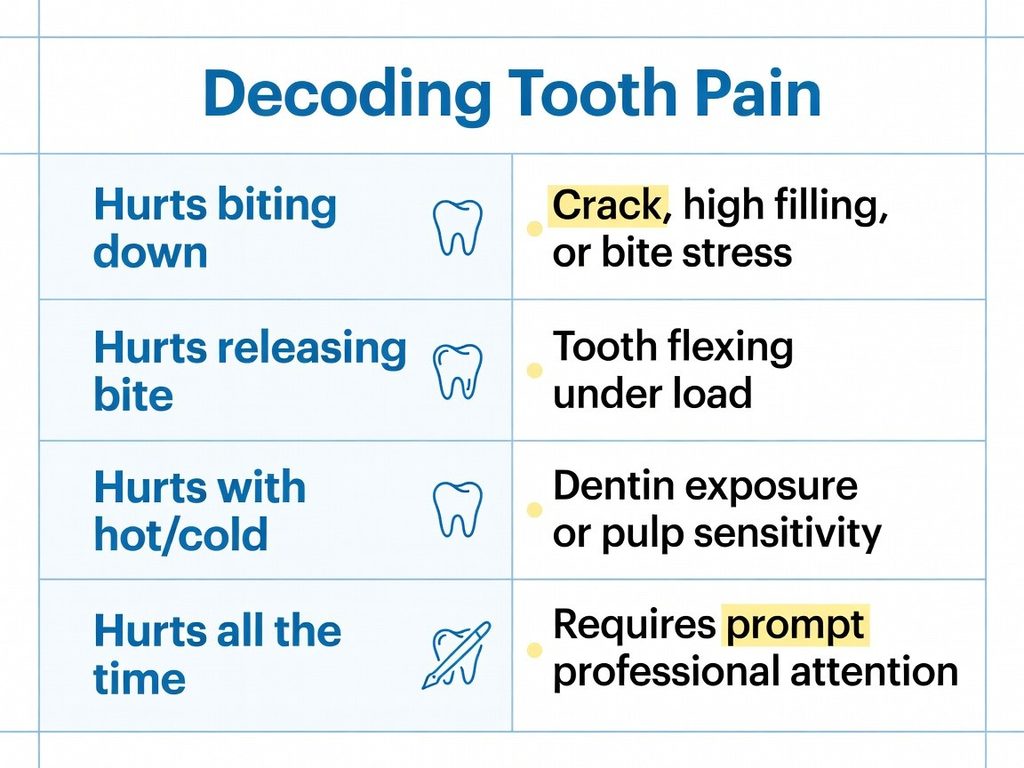
Describing your pain accurately matters more than diagnosing it yourself. A few patterns show up again and again:
- It hurts when I bite down — often structural or pressure-related, possibly a crack, a high filling, or bite stress concentrating force unevenly.
- It hurts when I release my bite — this specific detail is worth mentioning at your appointment, since release pain has a distinct clinical meaning tied to how the tooth flexes under load.
- It hurts with cold or hot foods — a separate mechanism from bite pain, usually pointing toward dentin exposure or pulp sensitivity.
- It hurts all the time — persistent, unprovoked pain deserves professional attention sooner rather than later.
- It only hurts occasionally — intermittent symptoms still count. If it keeps coming back, it’s worth checking even if it’s not constant.
When Bite-Related Tooth Pain Needs Attention
An exam becomes a reasonable next step once a pattern starts repeating. If the same tooth hurts every time you chew, if the discomfort is creeping up in intensity rather than staying flat, or if pain lingers after you’ve finished eating rather than fading, those are all reasonable triggers to book something. A tooth that suddenly feels different when you bite, even subtly, is telling you something changed structurally or positionally.
Don’t wait and see indefinitely. A symptom disappearing on its own doesn’t prove the underlying cause vanished with it. Cracks don’t heal the way bone does, according to the AAE’s patient overview on cracked teeth, so a fracture that stops hurting for a while can still be sitting there, waiting for the next hard bite to reactivate it.
Signs You Should Seek Prompt Dental Care
Some symptoms move past “schedule an appointment” territory into “don’t wait” territory. Facial or gum swelling, fever, a bad taste or visible pus near the tooth, and pain that’s escalating quickly all warrant faster attention. So does significant trauma to a tooth, or a tooth that’s become noticeably loose after an injury.
If swelling comes with difficulty swallowing or breathing, that’s not a routine dental scenario anymore, that’s something requiring urgent medical care, full stop. These signs don’t automatically confirm an infection or any specific diagnosis, but they do mean the timeline for getting checked shrinks considerably.
What a Dentist Checks When a Tooth Hurts to Bite
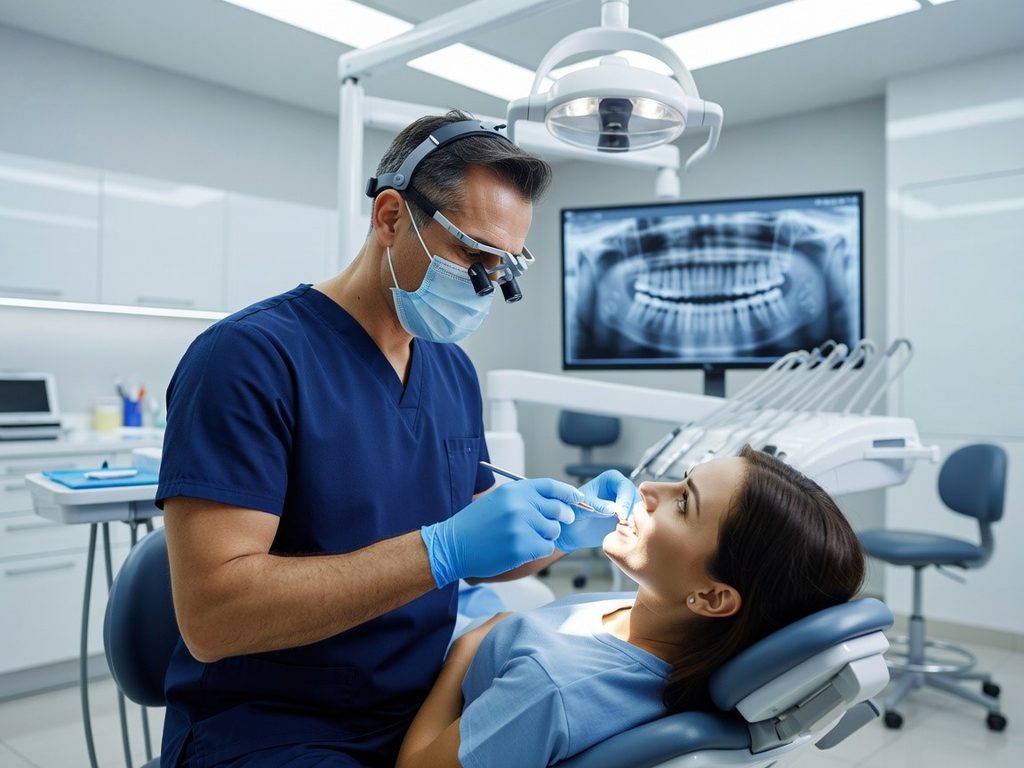
Walking into an appointment for bite pain usually means a fairly structured process. The dentist will ask when the pain started and what triggers it, biting, releasing, temperature, or just sitting there unprovoked. Then comes a visual exam of the tooth and surrounding gum tissue, a bite assessment to see how your teeth meet, and often some light pressure testing or tapping to isolate which tooth is actually responsible (a surprisingly tricky task, since pain can radiate and feel like it’s coming from a neighboring tooth). X-rays or other imaging often follow when something structural is suspected.
Dentists frequently compare the painful tooth against the ones next to it, since a lopsided response to the same test is a useful clue. In cases where a tooth has enough damage that a filling can’t reasonably restore it, a dental crown might come up as an option, though that’s a conversation for after the exam, not before it.
What You Can Do Until You Can Be Seen
While waiting for an appointment, a few practical habits reduce discomfort without masking anything important. Stop testing the tooth by biting on it repeatedly out of curiosity, that just aggravates it further. Chew on the opposite side when you can, favor softer foods temporarily, and skip anything hard or sticky that might aggravate the area. Keep brushing and flossing gently around the tooth rather than avoiding it entirely.
Pay attention to what specifically triggers the pain and roughly how long it lasts after eating, since that detail helps the dentist later. An over-the-counter pain reliever used according to label instructions is fine for short-term comfort, but skip the old myth about placing aspirin directly against the gum or tooth, it doesn’t work that way and can actually irritate the tissue.
When to See a Dentist in South Holland
If the same tooth keeps hurting when you bite or chew, getting it looked at is the only real way to know what’s going on. Don’t wait for the pain to become unbearable before mentioning a symptom that’s been showing up for weeks. For residents in South Holland, IL, Dental Care 4 U, under Dr. Raj Khurana, offers an option for getting that exam scheduled and figuring out whether the issue traces back to a crack, decay, a restoration, bite alignment, or something else entirely. You can find the practice at 16270 Prince Dr., South Holland, IL 60473, or reach them at (708) 333-2213.
Frequently Asked Questions
Why does my tooth hurt when I bite down? Pressure stresses whatever is already weakened, whether that’s a crack, decayed area, damaged filling, or irritated tissue around the tooth. An exam is really the only way to pin down which one it is.
Should I worry if my tooth only hurts when I chew? It’s worth paying attention to, even though it doesn’t automatically signal something serious. Recurring symptoms are a reasonable enough reason to get the tooth checked rather than waiting it out indefinitely.
Can a tooth that hurts when I bite heal on its own? Minor irritation sometimes settles down, but the pain going away doesn’t guarantee the underlying cause is gone. If it keeps coming back, that’s the signal to get it evaluated.
Does pain when biting mean I need a root canal? Not necessarily. A root canal only becomes appropriate when the tissue inside the tooth is actually involved, and that’s something only a dentist can confirm after an exam.
Does pain when biting mean I need a crown? Not always. A crown might be considered when structural damage is significant, but smaller repairs or other treatments can be just as appropriate depending on what the exam reveals.