Key Takeaways
- Protect the tooth right away. Rinse gently, chew on the other side, and save the fragment if you can find it.
- A chip can matter even with no pain. Small fractures are often quiet, so ask a dentist rather than assuming the tooth is fine.
- Know your escalation points. A significant break, worsening pain, swelling, or a sharp edge cutting your mouth needs prompt dental advice. Serious facial trauma or trouble breathing or swallowing means emergency medical care.
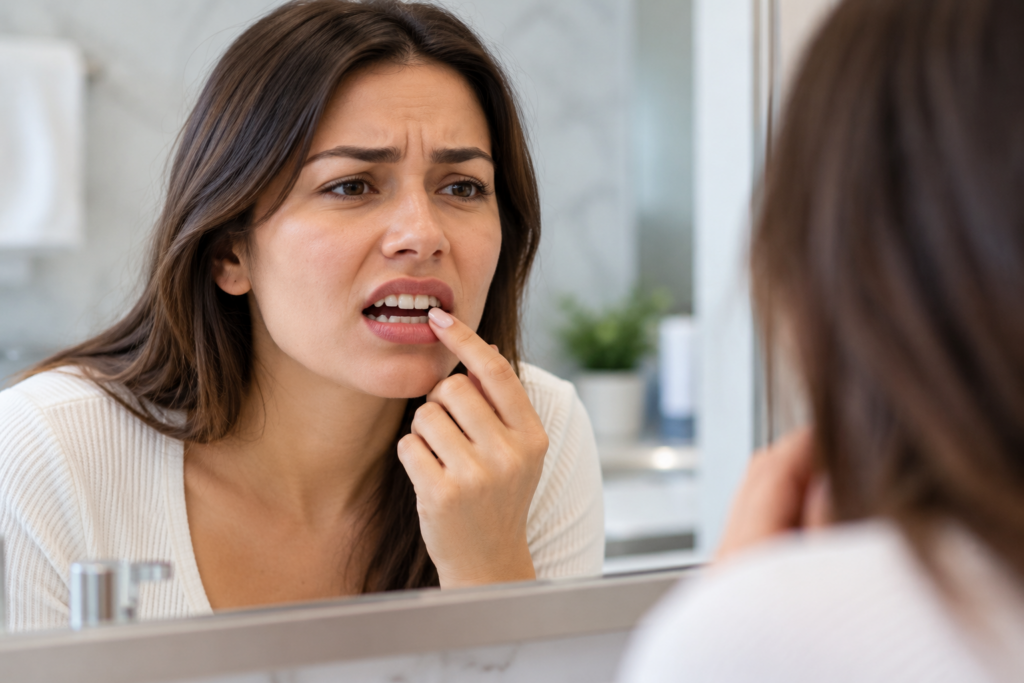
That crunch. You bite down on something ordinary, a bagel, an almond, a stray olive pit, and suddenly your tongue finds a jagged little cliff where smooth enamel used to be. Your stomach drops.
Chipped tooth, what to do? Breathe first. Then rinse gently with lukewarm water, stop chewing on that side, save any piece that broke off, press clean gauze on any bleeding, and call a dentist for advice on timing. Do not glue it. Do not file it.
What to Do If You Chip a Tooth
Question: What Should You Do If You Chip a Tooth?
Answer: Rinse your mouth with lukewarm water, avoid chewing on the damaged side, and put any broken piece in a clean container. If your mouth is bleeding, hold clean gauze against the spot with gentle pressure. Dental wax can temporarily cover a sharp edge to protect your cheek or tongue. Call a dentist for guidance even if nothing hurts. Severe pain, major damage, or swelling calls for urgent dental care, and heavy bleeding, serious facial trauma, or breathing and swallowing problems call for emergency medical help. Never glue the tooth or file it down yourself.
What to Do Immediately After Chipping a Tooth
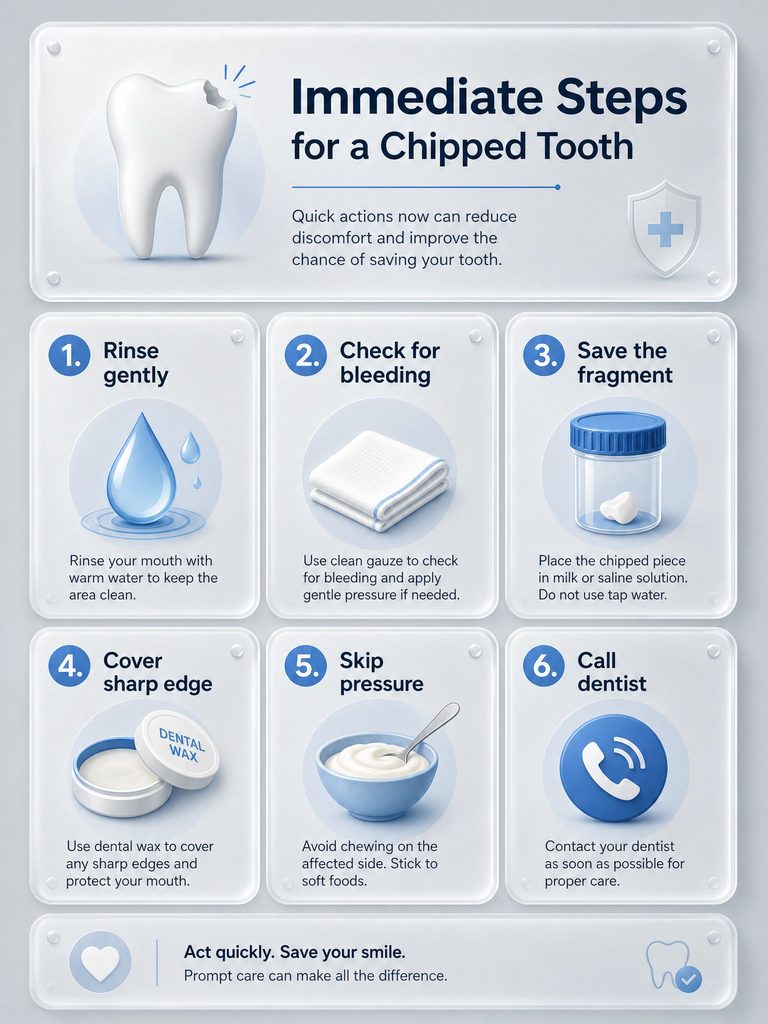
Do the boring, gentle things first for broken tooth first aid. The order matters less than the restraint.
- Rinse gently. Lukewarm water clears out grit and loose bits. Swish softly, then spit. No blasting with a water flosser.
- Check for bleeding. Fold a piece of clean gauze, press lightly, and hold it there. Lips and gums bleed dramatically, which looks worse than it is.
- Save the fragment. Any piece of tooth that has broken off goes into a clean container. Ask the dental office how they want it stored. MedlinePlus first aid guidance covers the basics for broken teeth, and the same advice shows up almost everywhere.
- Cover a sharp edge. Dental wax, or a small bit of sugar-free gum in a pinch, keeps the tooth from slicing your tongue.
- Skip the pressure. Chew on the opposite side and stick to soft foods until a dentist weighs in.
- Call the dentist. Say how it happened, whether there’s pain or sensitivity, and how much of the tooth seems missing.
Why bother saving the piece? Because sometimes a dentist can use it. Sometimes not. You won’t know until they look, and Colgate’s guide to severely cracked teeth explains why bringing it is worth the thirty seconds.
What Not to Do When You Chip a Tooth
Panic fixes cause more damage than most chips do. Resist them.
- Don’t bite down over and over to “test” the tooth.
- Don’t chew hard, crunchy, or sticky foods on the damaged side.
- Don’t file, trim, or scrape the edge yourself.
- Don’t use household glue, superglue included, to reattach anything. It’s cheap, it’s toxic, and it can turn a small repair into a bigger, pricier one.
- Don’t put aspirin directly on the tooth or gums. It burns the tissue.
- Don’t test very hot or very cold drinks if they make the tooth zing.
- Don’t postpone an assessment just because the chip is painless.
Does a Chipped Tooth Count as a Dental Emergency?
Sometimes. Urgency depends on how much is damaged, what you feel, and how the injury happened. A tumble off a bike is a different story from a nibble on a popcorn kernel.
| Situation | Suggested next step |
|---|---|
| Small chip, no pain, nothing else concerning | Contact a dentist for advice and an appointment. Don’t assume the tooth is undamaged. |
| Sharp edge cutting your tongue or cheek | Contact a dentist promptly. Wax can protect the area for now. |
| Significant break, pain when biting, lingering sensitivity, or a loose tooth | Seek prompt dental assessment. |
| Severe or escalating pain, swelling, or suspected infection | Seek urgent dental care. |
| Serious facial trauma, uncontrolled bleeding, or trouble breathing or swallowing | Go to the emergency room or call 911. |
If your tooth is painful, significantly broken, or cutting your mouth, contact a dentist promptly and ask about tooth chipped emergency dental care availability. Don’t assume anyone has a same-day slot until the office confirms it.
A small chip without pain isn’t automatically a medical emergency. It still deserves a look, because the visible chip may be the least of what’s going on inside.
What to Do If Your Chipped Tooth Hurts
Start with the obvious: keep your bite off that side. Choose soft foods, and skip ice water and steaming coffee if either one sets off a jolt.
For swelling after a knock to the face, hold a cold compress against the outside of your cheek, 15 minutes at a time. Never on the tooth itself.
Over-the-counter pain relievers can take the edge off. Follow the package directions, and if you’re unsure whether something is safe with your medications or health history, ask a pharmacist. No painkillers pressed against the gums. No home remedy repairs enamel, either, and I’d be suspicious of anyone who says otherwise.
Tell your dentist about pain when you bite, sensitivity that lingers, or discomfort that’s getting worse. And here’s a point people miss: how much it hurts doesn’t reliably tell you how deep the damage runs. A mild ache can hide a nasty fracture. A scary sting can come from a shallow chip.
What If the Chipped Tooth Doesn’t Hurt?
This is where people talk themselves out of care. Chipped tooth no pain, so no problem, right?
Not quite. Small chips often cause little or no discomfort, mostly because the damage stays in the enamel and doesn’t reach the sensitive layers beneath. But painless doesn’t prove the tooth is structurally sound. Larger cracks can be hard to judge by eye, and your own mirror isn’t an X-ray.
Call for advice on timing, especially if the break is fresh, the tooth already has a large filling, or the injury came with real force. That doesn’t mean every painless chip needs same-day treatment. It means a professional should decide.
No pain doesn’t always mean no problem. Let a dentist assess the damage and advise how soon it should be checked.
What Will the Dentist Do for a Chipped Tooth?
Expect questions first: how it happened, whether it hurts, whether it’s sensitive. Then an exam of the tooth, the neighboring teeth, and your soft tissues. X-rays come in when they’re clinically useful, not automatically.
Treatment follows the findings. A minor chip might only need smoothing, a cosmetic procedure Healthline describes as teeth reshaping, or a bit of bonding with tooth-colored resin. Bigger damage can call for a veneer or a crown. If the injury reaches the inner tooth, more involved care such as a root canal may come into the conversation. Healthline’s overview of tooth restoration types lays out the typical options and rough costs, handy for going in informed.
Nobody should promise you a crown before they’ve examined you. Same for the idea that every minor chip gets fixed in one visit. The sequence is simple: assess the damage, explain the options, agree on next steps. If it turns into more than a quick fix, learn what it means when a tooth needs more than a filling before you sign off on anything.
The First 24 Hours: A Simple Checklist
- Rinse gently with lukewarm water.
- Control bleeding with clean gauze if needed.
- Save any broken fragment in a clean container.
- Cover a sharp edge with dental wax if you have it.
- Avoid chewing on the affected side.
- Note any pain, swelling, sensitivity, or a bite that feels “off.”
- Call a dentist for advice on timing.
- Seek urgent or emergency care if any warning signs show up.
Chipped Tooth Care in South Holland, IL
If you’re near South Holland, IL, a local practice like Dental Care 4 U can assess a chipped or broken tooth and tell you how soon to come in. Call before you head over, describe what happened, and ask about availability, since appointment times depend on the day. Bring the fragment if you saved one. Then let a professional take it from there.
Frequently Asked Questions
Should I see a dentist for a small chipped tooth?
Yes, contact a dentist for advice even if the chip is small and painless. They can assess the damage and recommend timing and treatment.
Can a chipped tooth wait until tomorrow?
It depends on the extent of the chip, your symptoms, and how the injury happened. Call for guidance. Significant damage, severe pain, or swelling needs faster attention.
What should I do if a chipped tooth has a sharp edge?
Avoid touching or biting on it. Dental wax can temporarily cover the edge to protect your tongue or cheek. Arrange dental advice so the edge and the tooth underneath can be checked.
Should I keep the piece of tooth that broke off?
Yes. Put it in a clean container and bring it along. Ask the practice how best to store it, and don’t try to glue it back yourself.
Can a chipped tooth heal on its own?
No. Enamel doesn’t grow back. Some minor chips need only limited treatment, but a dentist should assess the damage and decide whether repair is needed.
Read More Articles
Dental Crowns in South Holland, IL: Types, Costs, Timeline and What to Expect
Same-Day Crowns in South Holland: One Visit, No Temporary Crown
What a Dental Crown Costs in South Holland: 2026 Price Ranges by Material
Broken or Lost Crown? Emergency Crown Repair in South Holland
Replacing an Old or Failing Crown: When It’s Time and What It Costs
Getting a Crown at Dental Care 4U: What Happens at Each Visit
Crown or Extraction? How We Decide Whether a Tooth Can Still Be Saved
Will Your Plan Cover a Crown? How to Check Before You Book
Paying for a Crown Without Dental Insurance in South Holland
Front Tooth Crowns in South Holland: Getting the Colour and Shape Right
Crowns for Children and Teens: Stainless Steel and Tooth-Coloured Options
Porcelain vs Zirconia vs Metal Crowns: Which One Actually Lasts
Same-Day vs Lab-Made Crowns: What You Trade for the Speed
Filling, Onlay or Crown: How Much Damage Changes the Fix
Crown or Veneer: Which One Your Front Tooth Actually Needs
Crown or Implant: When to Save the Tooth and When to Replace It
How Long a Crown Takes, Step by Step
Do You Need a Root Canal Before a Crown?
How Long Crowns Last and What Shortens Their Life
Does Getting a Crown Hurt? What the Numbing and Recovery Actually Feel Like
Choosing a Dentist for Crown Work in South Holland: What to Ask First
Why Your Tooth Hurts When You Bite Down
Cracked Tooth Syndrome: The Pain That Comes and Goes
What a Large Old Filling Does to a Tooth Over Time
Why Teeth Break: Grinding, Age and the Foods That Do It
Crown, Cap, Onlay: What the Words Your Dentist Used Actually Mean
Signs a Tooth Needs More Than a Filling
Why a Crowned Tooth Can Still Get a Cavity