Key Takeaways
- Sensitivity across several teeth is often tied to exposed dentin, gum recession, or enamel wear.
- Sudden or lingering sensitivity in one tooth deserves particular attention, since a cavity or crack may be involved.
- Sensitive toothpaste helps some people. Ongoing, worsening, or odd symptoms still need a dentist.
Tooth sensitivity causes are rarely mysterious, but they sure feel that way when a sip of ice water makes you flinch at a coffee shop. If you’re sensitive to cold and sweet foods, you’ve probably tried a tube of sensitive toothpaste, maybe two, and the zing keeps showing up anyway.
Annoying. Also informative.
The number of teeth involved, how suddenly it started, and how long the ache hangs around all offer clues. None of them confirm a diagnosis, though. Only an exam does that. So let’s walk through the common causes, the gap between several sensitive teeth and just one, and when it’s time to stop guessing.
Common Causes of Tooth Sensitivity to Cold and Sweet Foods
Question: What Causes Tooth Sensitivity to Cold and Sweet Foods?
Answer: Tooth can sensitive to cold and sweet due to being exposed to dentin, gum recession, enamel wear, decay, or a cracked tooth. Sensitivity in several teeth may have a different explanation than sudden discomfort in one tooth. If pain lingers after the trigger is gone, worsens, or shows up when you bite, arrange a dental assessment rather than relying on toothpaste alone.
What Causes Tooth Sensitivity to Cold and Sweet Foods?
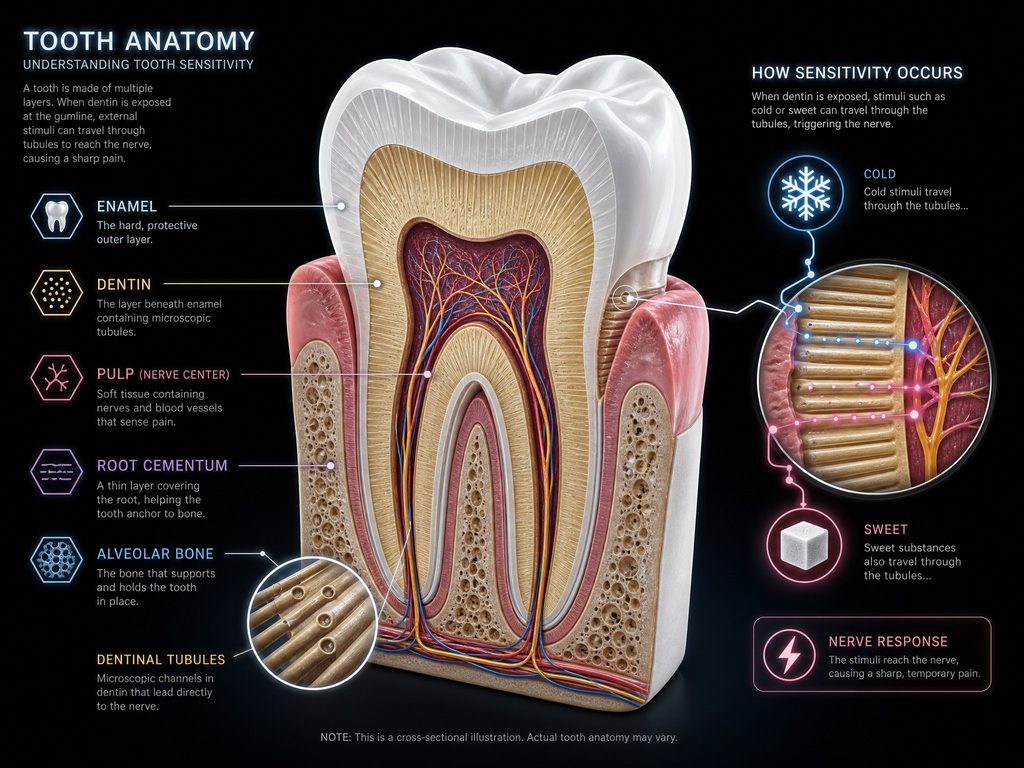
Picture a tooth as a layered thing. Enamel sits on the crown like a hard shell, and cementum, a thinner coating, covers the root below the gum line. Under both lies dentin, which is riddled with microscopic tubules, tiny fluid-filled channels running toward the nerve.
When dentin gets exposed, cold, sugar, or acid can make that fluid shift. The nerve registers it as a quick, sharp jolt. Researchers call this the hydrodynamic theory, and this literature review on dentin hypersensitivity walks through it well, including how widely the reported prevalence varies, from about 2% to 85% of adults depending on the study.
So what exposes the dentin? A few usual suspects:
- Enamel wear or erosion: acidic drinks, constant snacking, hard brushing, or grinding thin the shell over time.
- Gum recession: the gum pulls back and the root surface, with its thin cementum, is suddenly out in the open.
- Tooth decay: a cavity can make sweets or temperature changes sting.
- Cracks or worn fillings: these tend to cause localized symptoms.
- Recent dental work: cleanings, root work, or whitening can cause a temporary flare.
My hot take? “No cavities” doesn’t mean nothing’s going on. The boring culprits, worn enamel and retreating gums, explain a huge share of cases. Sensitivity alone still can’t tell you which one is yours.
Several Sensitive Teeth or Just One? Why the Difference Matters
This is the distinction I wish more people understood. A broad, low-grade zing and a single-tooth surprise are not the same story.
When Several Teeth Feel Sensitive
Widespread sensitivity usually points toward the everyday stuff. Exposed dentin, receding gums, erosion, or years of scrubbing too hard. Whitening can do it too, since peroxide temporarily makes enamel more porous, something the Mayo Clinic’s guidance on sensitive teeth acknowledges.
Ask yourself whether it’s several areas or really just one spot. And even broad sensitivity deserves a look if it’s new, sticks around, or keeps getting worse.
When One Tooth Suddenly Becomes Sensitive
One tooth that suddenly behaves differently from its neighbors? Pay attention. It could be decay, a crack, a leaky filling, a gum problem, or irritation of the inner tissue. It could also be less dramatic than any of those. Nobody can say without looking.
Cold that lingers, pain on biting, or a steady worsening are exactly the details to report. And please don’t keep treating one stubborn tooth with toothpaste forever. If you’re curious about biting pain specifically, it’s worth reading about what causes pain when you bite down, though I can’t point you to a verified page for it here.
| Pattern | What it may suggest | Sensible next step |
|---|---|---|
| Several teeth react briefly to cold | Generalized sensitivity, exposed dentin, or enamel wear | Review habits; get assessed if persistent or worsening |
| One tooth suddenly reacts differently | A localized issue such as decay or a crack | Arrange a dental assessment |
| Pain lingers after cold or sweets | The tooth may need closer evaluation | Contact a dentist promptly |
| Biting pain or a damaged tooth | A crack or restoration problem | Seek a timely assessment |
Think of this table as a map of possibilities, not a diagnostic tool. It can’t rule anything out.
When Is Sensitivity More Than Ordinary Sensitivity?

Brief, mild, and spread across a few teeth? Usually less worrying. New, worsening, persistent, or stuck on one tooth? Different conversation.
Book a check if you notice any of these:
- Discomfort that continues after the cold or sweet trigger is gone.
- Pain when biting, a chipped tooth, a lost filling, or a visible crack.
- A spontaneous toothache, or pain that wakes you at night.
- Swelling, fever, or pain that keeps escalating.
I won’t hand you a “wait three days” rule, because severe or worsening symptoms don’t follow rules. Severe swelling that spreads quickly, or any trouble breathing or swallowing, is an emergency. Go to emergency care, not a dental waiting room.
Can Sensitive Toothpaste Help?
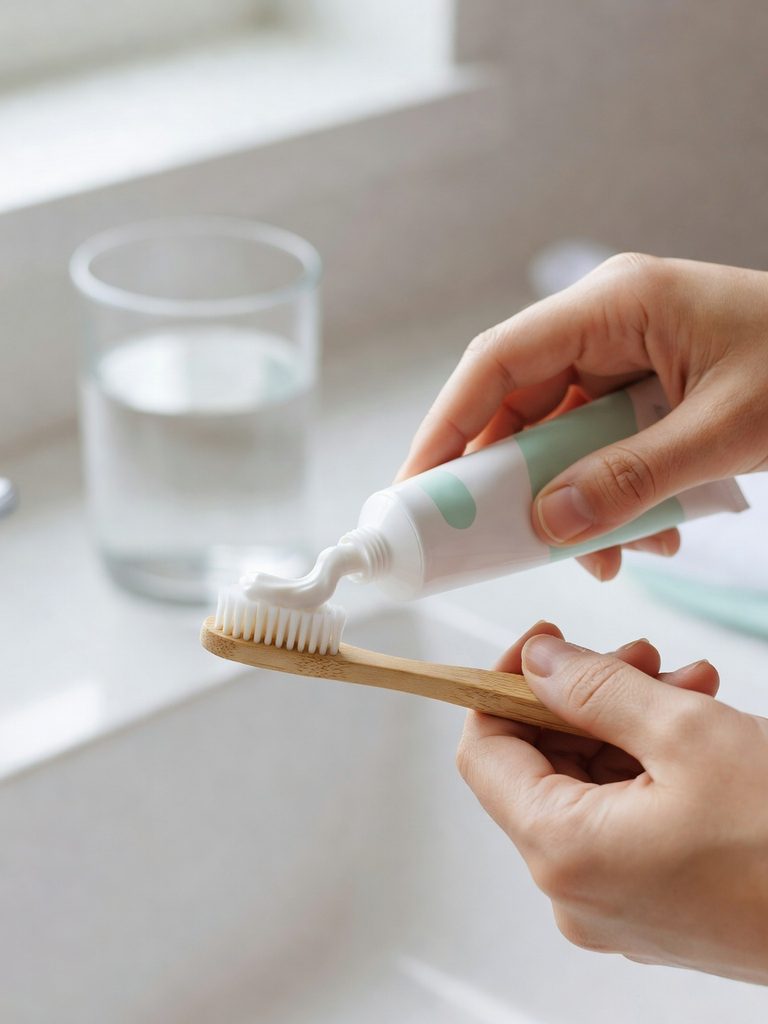
Sometimes, yes. Formulas made for sensitivity can calm certain kinds of it, especially when used as directed and for long enough. Expect weeks, not days.
Meanwhile, a few habits do more than any gadget:
- Switch to a soft-bristled brush and ease up on pressure.
- Skip abrasive whitening pastes.
- Cut back on frequent acid, like sodas, sparkling water, citrus, and wine, especially sipped all day.
The ADA’s aging and dental health resource notes how common root exposure becomes with age, so gentler brushing matters more as years pass.
Now the limit. Toothpaste can’t fill a cavity, mend a crack, or replace a failing restoration. If sensitive teeth won’t go away, or one tooth keeps complaining, relief isn’t the same as an answer. And sensitivity after a cleaning or root work can flare temporarily without meaning anything went wrong.
What Will a Dentist Check?

Less scary than people expect. Mostly questions at first: which teeth, what triggers it, how long it lasts.
Then the exam. Your dentist may look for decay, cracks, worn fillings, gum recession, and signs of enamel wear. Depending on findings, that could include temperature testing, other clinical tests, or X-rays. Not every patient gets every test.
Treatment follows the cause. Sometimes that’s just preventive advice. Other times it’s treating decay, repairing a restoration, or evaluating a crack. Not every sensitive tooth needs a filling or crown, and honestly, the fancy-treatment chase is overrated if the exposure keeps happening. If the sore spot is on a tooth that already has a crown, dental crowns and what to expect covers how those restorations are assessed.
Helpful things to tell your dentist:
- Which tooth or teeth are affected.
- Whether cold, sweets, heat, or biting sets it off.
- Whether it stops right away or lingers.
- When it started and whether it’s getting worse.
When Should You Arrange a Dental Appointment?
Sooner if sensitivity is new, persistent, worsening, or fixed on one tooth. Contact a dentist promptly if pain lingers, biting hurts, a tooth cracks or chips, or a filling loosens or falls out. Significant or escalating pain or swelling calls for urgent dental advice.
Mild, brief sensitivity across several teeth? Review your brushing and diet, then get checked if it continues.
If you’re near Illinois, a sensitive teeth south holland dentist like the team at Dental Care 4 U can look at it in person. Contact them if your sensitivity is new, worsening, or centered on one tooth.
Pay Attention to the Pattern, Not Just the Pain
A zing means something, just not always the same thing. Several sensitive teeth often tell a different story than one tooth that suddenly acts up, and toothpaste is a fine helper but a lousy excuse to wait when symptoms change or stick around.
If it’s one tooth, read up on what causes pain when you bite down, since single-tooth sensitivity can sometimes link to a crack or another structural issue.
Frequently Asked Questions
Why are my teeth sensitive to cold but not hot?
Different triggers produce different responses depending on the cause and the tooth. Cold sensitivity alone can’t confirm a diagnosis. If it’s new, localized, persistent, or worsening, arrange an assessment.
Why do sweets make my tooth hurt?
Sweet foods can set off discomfort in teeth with exposed dentin or decay, among other causes. Location and duration matter. Repeated pain in one tooth should be checked, not managed at home indefinitely.
Can sudden tooth sensitivity go away on its own?
Some temporary sensitivity improves. But sudden tooth sensitivity can also reflect decay, a crack, or something else. Pain that comes and goes isn’t proof it’s resolved. Seek care if it persists or worsens.
Should I stop using sensitive toothpaste if my tooth still hurts?
Follow the product directions unless your dentist says otherwise. Continued or worsening pain, especially in one tooth, needs assessment, because toothpaste can’t treat every underlying cause.
When should I worry about a sensitive tooth?
Watch for sensitivity that’s new, worsening, lingering after a trigger, or paired with biting pain, swelling, or visible damage. Severe swelling with trouble breathing or swallowing needs emergency medical care.
Read More Articles
Dental Crowns in South Holland, IL: Types, Costs, Timeline and What to Expect
Same-Day Crowns in South Holland: One Visit, No Temporary Crown
What a Dental Crown Costs in South Holland: 2026 Price Ranges by Material
Broken or Lost Crown? Emergency Crown Repair in South Holland
Replacing an Old or Failing Crown: When It’s Time and What It Costs
Getting a Crown at Dental Care 4U: What Happens at Each Visit
Crown or Extraction? How We Decide Whether a Tooth Can Still Be Saved
Will Your Plan Cover a Crown? How to Check Before You Book
Paying for a Crown Without Dental Insurance in South Holland
Front Tooth Crowns in South Holland: Getting the Colour and Shape Right
Crowns for Children and Teens: Stainless Steel and Tooth-Coloured Options
Porcelain vs Zirconia vs Metal Crowns: Which One Actually Lasts
Same-Day vs Lab-Made Crowns: What You Trade for the Speed
Filling, Onlay or Crown: How Much Damage Changes the Fix
Crown or Veneer: Which One Your Front Tooth Actually Needs
Crown or Implant: When to Save the Tooth and When to Replace It
How Long a Crown Takes, Step by Step
Do You Need a Root Canal Before a Crown?
How Long Crowns Last and What Shortens Their Life
Does Getting a Crown Hurt? What the Numbing and Recovery Actually Feel Like
Choosing a Dentist for Crown Work in South Holland: What to Ask First
Why Your Tooth Hurts When You Bite Down
Cracked Tooth Syndrome: The Pain That Comes and Goes
What a Large Old Filling Does to a Tooth Over Time
Why Teeth Break: Grinding, Age and the Foods That Do It
Crown, Cap, Onlay: What the Words Your Dentist Used Actually Mean
Signs a Tooth Needs More Than a Filling
Chipped a Tooth? What to Do in the First 24 Hours