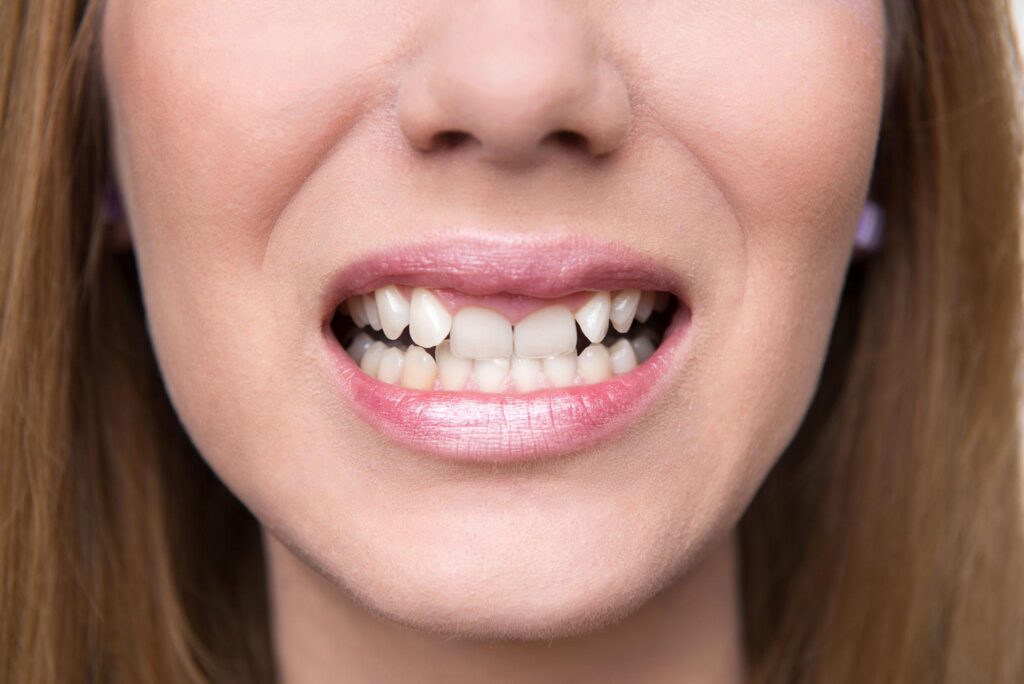
You look in the mirror one morning and something’s off. Your bottom teeth, the ones that used to sit in a neat little row, are stacked slightly on top of each other now. Or maybe there’s a sliver of space between your two front teeth that definitely wasn’t there at your last birthday. You didn’t do anything different. You brushed, you flossed (okay, mostly flossed), you didn’t get hit in the face with a soccer ball. So why do teeth shift in adults when nothing seems to have changed?
Here’s the direct answer: teeth shift because the mouth is not a static structure. It’s alive, constantly responding to pressure, aging, bone density, gum health, and whatever forces you’re putting on it every time you chew, clench, or sleep with your jaw doing something you’re not even aware of. Adult teeth getting crooked isn’t some freak accident. It’s usually one of a handful of predictable culprits, and once you know what they are, the mystery stops being scary and starts being manageable.
I’ve talked to enough people about this to notice a pattern. Nobody thinks their teeth will move once they’re grown. We treat adult teeth like they’re the final draft. They’re not. They’re more like a living document that keeps getting quietly edited, decade after decade, whether you’re paying attention or not.
3 Key Takeaways
- Adult teeth shifting is common, but the cause matters.
Teeth naturally change position as the mouth ages, but noticeable crowding, new gaps, or changes in your bite may point to issues like gum disease, missing teeth, grinding, or skipped retainer use. - Sudden tooth movement should not be ignored.
Gradual changes over many years are often normal, but loose teeth, rapidly appearing gaps, bleeding gums, or bite changes can signal underlying problems that need a dental evaluation. - Adults have treatment options for crooked or shifting teeth.
Clear aligners, braces, retainers, and restorative treatments can help correct movement. The right solution depends on what caused the teeth to shift in the first place.
Why do adults’ teeth become crooked over time?
Question: Why do adults’ teeth become crooked over time?
Answer: Adult teeth can shift because the mouth continues changing throughout life. Aging, changes in jawbone structure, gum health, missing teeth, teeth grinding, and not wearing retainers after braces can all contribute to teeth becoming crowded or misaligned.
What “Why Do Teeth Shift in Adults?” Really Means
Let’s clear something up first, because I think this is where a lot of unnecessary panic starts. Small changes in tooth position over the years are normal. Completely normal. Your teeth at 45 are not going to sit exactly where they sat at 25, even if you never had braces, never lost a tooth, never had a cavity. That’s just how a mouth ages.
But “normal drift” and “something is actually wrong” can look similar from the outside, which is exactly why people get confused. Gaps between teeth appearing suddenly, crowding that seems to accelerate, or a tooth that feels loose are different animals than the slow, barely-there shifting most adults experience. The only way to know which one you’re dealing with is an actual look inside your mouth, not a Google search at 11 p.m. (I say that with love. I’ve done it too.)
The Most Common Causes of Adult Tooth Movement
There isn’t one villain here. It’s more like five suspects, and most people have more than one working against them at the same time.
Natural Aging
Jawbones lose density as we age, and the lower jaw actually narrows slightly over the decades. That narrowing puts gentle, constant pressure on your front teeth, nudging them to overlap in ways they didn’t in your twenties. This is why so many adults notice their bottom front teeth becoming the first area to crowd. It’s not because those teeth are weaker. It’s because the architecture holding them is quietly changing shape underneath.
Not Wearing Retainers
If you had braces as a teenager and stopped wearing your retainer sometime around, oh, sophomore year of college, this one’s probably familiar. Orthodontic movement doesn’t lock into place permanently the day the brackets come off. Teeth continue to settle for months afterward, and they can continue drifting for years if nothing is holding them in their corrected position. This is called relapse, and it’s shockingly common. It’s not a failure on your orthodontist’s part. It’s what happens when the retention phase gets skipped or shortened.
Gum Disease
This is the one that deserves the most attention, frankly, because it’s the one people underestimate. Gum disease, or periodontitis in its more advanced form, breaks down the bone and gum tissue that anchor your teeth in place. Once that support system weakens, teeth can loosen and drift, sometimes fairly quickly. This isn’t something to self-diagnose. If you’re noticing looseness alongside shifting, that’s a conversation for a professional, not a wait-and-see situation.
Missing Teeth
An empty socket doesn’t stay empty for long. Neighboring teeth tilt toward the gap, opposing teeth can even grow slightly longer trying to find something to bite against, and your entire bite can shift as a result. It’s one small missing piece causing a domino effect across the whole arch.
Teeth Grinding (Bruxism)
Grinding at night puts repetitive, forceful pressure on your teeth, often without you knowing it’s happening at all until a dentist points out the wear patterns. Over time, that pressure can wear down enamel and gradually push teeth out of alignment, sometimes altering the bite itself.
| Cause | Common Signs | Can It Be Treated? |
|---|---|---|
| Natural Aging | Gradual front crowding, subtle year-over-year change | Often managed with clear aligners or minor orthodontic care |
| Retainer Non-Use | Return of old crowding or spacing after braces | Usually correctable with aligners or a new retainer |
| Gum Disease | Loose teeth, bleeding gums, visible drifting | Requires periodontal treatment first, then possible orthodontics |
| Missing Teeth | Tilting neighbors, bite changes | Implants, bridges, or orthodontic correction |
| Bruxism | Worn enamel, flattened teeth, jaw soreness | Night guards, sometimes combined with orthodontic care |
When Tooth Shifting Is Usually Minor vs. When to Get It Checked
Mild, gradual changes over several years generally fall into the “keep an eye on it” category. That’s the aging process doing its slow, unglamorous work. But there are specific red flags that move this from casual observation to “call your dentist” territory.
New gaps that show up suddenly rather than over years, teeth that feel loose when you press on them, difficulty biting down the way you used to, jaw discomfort that wasn’t there before, or noticeable shifting right after losing a tooth. These may indicate something more active going on beneath the surface, and they can sometimes be associated with gum disease or bone loss that needs professional attention. If you’re already wondering about signs you need to see a dentist, sudden shifting belongs on that list right alongside pain and bleeding.
What a Dentist Looks for During an Exam
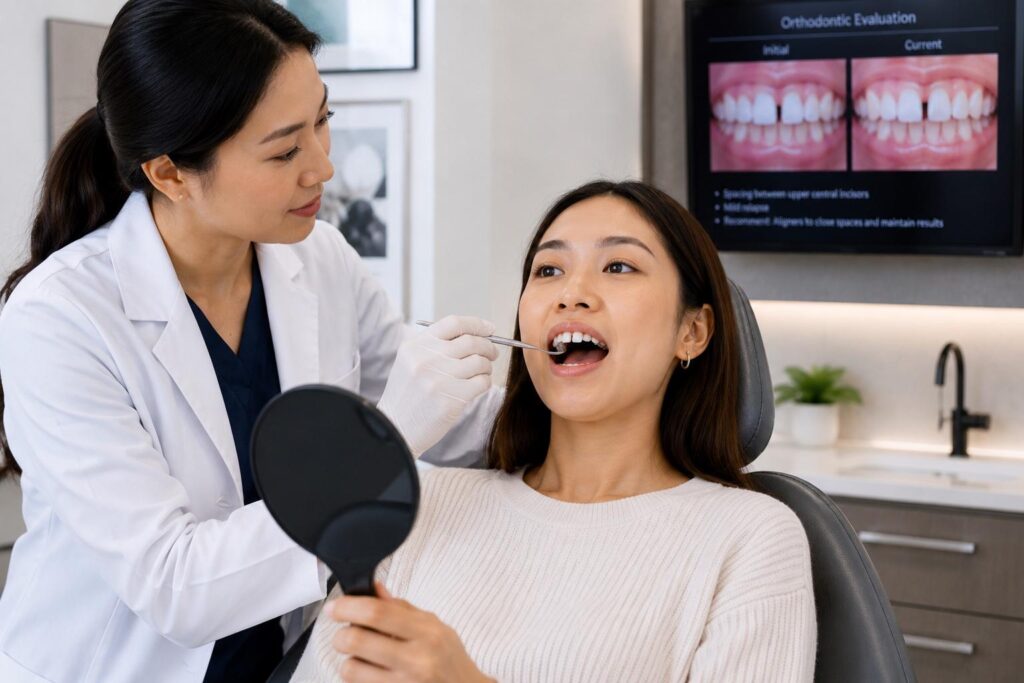
Walking into an evaluation for shifting teeth isn’t as intimidating as people assume. A dentist is going to check your bite first, looking at how your upper and lower teeth meet when you close your mouth. From there, gum health gets assessed, since receding gums or pocket depth can tell a much bigger story than what’s visible to the naked eye. They’ll note any missing teeth, look for wear patterns that suggest grinding, and ask about previous orthodontic history because past treatment changes what the current shifting might mean.
X-rays often come next if anything looks like it needs a closer view, particularly for checking bone levels around the teeth roots. Only after all that does a conversation about treatment even start, because the right fix depends entirely on what’s actually causing the movement, not just how the smile looks in a photo.
Can Adults Straighten Their Teeth?
Yes, and honestly, this surprises a lot of people who assume orthodontics ended at graduation. Clear aligners have become one of the more popular routes for adults specifically because they’re less visible and fit into daily life without the metal-mouth aesthetic. Traditional braces are still used too, particularly for more complex bite issues. Retainers come back into the picture here as well, since whatever gets corrected needs something to hold it in place afterward. In cases involving missing teeth or more significant bone loss, restorative options like implants or bridges might be part of the plan before orthodontic work even makes sense.
The honest answer is that most adults are candidates for some form of treatment, but what works for one person’s crowding won’t necessarily be the right call for someone else’s gap or bite issue. If you’re weighing your options, our breakdown of Invisalign vs. braces for adults walks through the cost, timeline, and comfort differences in more detail.
When to Visit Dental Care 4 U in South Holland
If your teeth are noticeably shifting, if new gaps have shown up out of nowhere, if crowding is making it harder to floss properly, or if your bite just feels different than it used to, that’s worth a real conversation rather than more guessing. Dr. Raj Khurana at Dental Care 4 U can evaluate what’s actually driving the movement in your specific case and walk through which treatments, if any, make sense.
Dental Care 4 U 16270 Prince Dr. South Holland, IL 60473 (708) 333-2213
Curious whether clear aligners or traditional braces fit your situation better? Our comparison of Invisalign vs. braces for adults covers cost, timeline, and comfort side by side, or you can reach out directly to schedule an evaluation.
Frequently Asked Questions
Is it normal for adult teeth to shift?
Small changes in tooth position can occur naturally with age. Significant crowding, new gaps, or loose teeth, though, should be evaluated to rule out an underlying issue like gum disease.
Can shifting teeth move back on their own?
Generally, no. Teeth don’t reverse course without some form of treatment. What that treatment looks like depends entirely on why the teeth shifted in the first place.
When should I see a dentist about shifting teeth?
If your teeth are becoming noticeably more crowded, gaps are appearing, your bite feels different, or you’re just uneasy about changes in your smile, that’s reason enough to get it checked.
Can adults straighten their teeth?
Yes. Many adults are good candidates for clear aligners, braces, or other orthodontic treatment, though the right approach depends on individual oral health and the underlying cause of the movement.