My partner made me sleep on the couch for three nights straight before I finally admitted something was wrong. Not because of an argument. Because of the noise coming out of my own face at 2 AM.
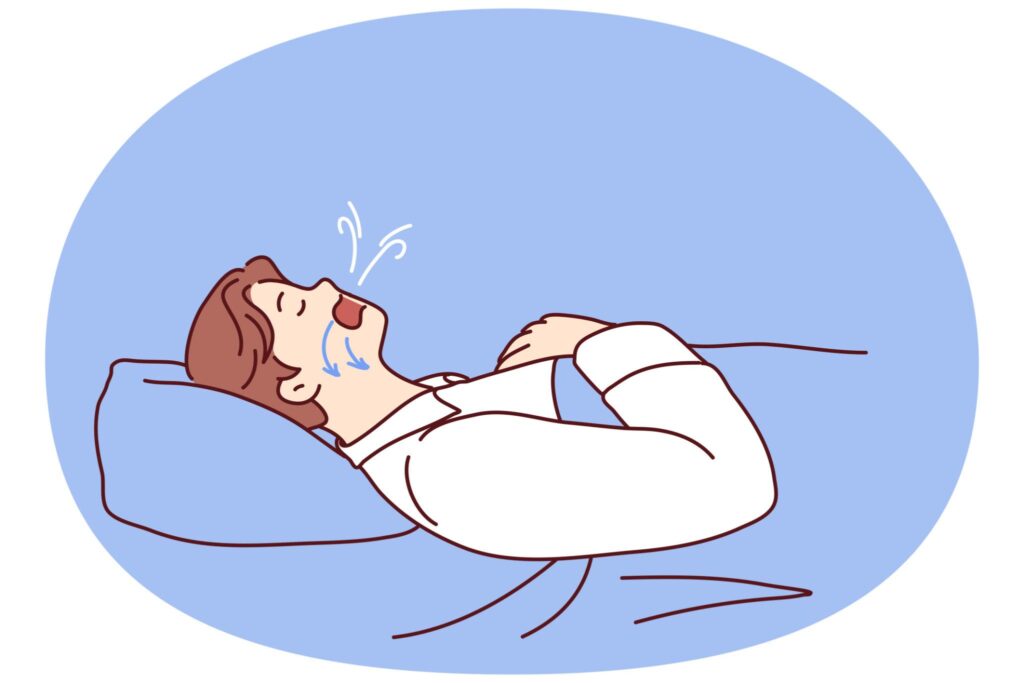
Here’s the direct answer, since you probably want it before anything else: snoring and sleep apnea are related, but they are not the same condition, and treating them as interchangeable is where most people go wrong. Snoring is just sound. It’s the vibration of soft tissue in your throat when air struggles to move past a narrowed passage. Sleep apnea is a medical disorder where your airway actually collapses, repeatedly, cutting off airflow and starving your blood of oxygen for seconds at a time. One is a nuisance. The other is something your body is actively fighting through while you’re unconscious and completely unaware of the war happening in your own throat.
I used to tell myself the snoring was “just my anatomy.” Or allergies. Or that I’d had one too many glasses of wine before bed (fair, sometimes). And look, those explanations aren’t wrong exactly. But they’re incomplete, and incomplete explanations are how people end up ignoring something that actually needed a doctor’s attention two years earlier than they finally got one.
3 Key Takeaways
- Snoring and sleep apnea are not the same—snoring is common, while sleep apnea involves repeated interruptions in breathing during sleep.
- Loud snoring accompanied by daytime fatigue, gasping, or witnessed breathing pauses should prompt a medical evaluation rather than self-diagnosis.
- Dentists can help treat certain patients with diagnosed sleep apnea using custom oral appliances, but diagnosis should come from a physician and sleep study first.
How can you tell if your snoring is actually sleep apnea?
Question: How can you tell if your snoring is actually sleep apnea?
Answer: Snoring is the sound of narrowed airways during sleep, while sleep apnea is a medical condition where the airway repeatedly collapses and temporarily stops breathing. Frequent loud snoring combined with symptoms like gasping, witnessed breathing pauses, daytime fatigue, or morning headaches should be evaluated with a sleep study, after which a dentist may help eligible patients with oral appliance therapy.
What “Snoring vs Sleep Apnea” Really Means
Snoring vs sleep apnea isn’t as simple as “snoring equals sleep apnea.” Occasional snoring is common and can be triggered by a cold, alcohol, allergies, or sleeping on your back. While obstructive sleep apnea can cause loud, persistent snoring, not everyone who snores has sleep apnea. The key is looking at the full picture, including symptoms like pauses in breathing, gasping during sleep, excessive daytime fatigue, and poor sleep quality.
Obstructive sleep apnea, often abbreviated OSA, is defined clinically by repeated pauses or dramatic reductions in breathing during sleep, each one long enough to lower your blood oxygen and yank you out of deep sleep, even if you never fully wake up to notice it. Confirming that diagnosis isn’t a guessing game done from a symptom list. It requires a formal evaluation, usually a sleep study, sometimes done in a lab, sometimes at home with a portable monitor. If you’re searching for a dentist in South Holland because you suspect something’s off with your sleep, that instinct to investigate further is the right one. Snoring is the smoke. Sleep apnea is sometimes, not always, the fire underneath it.
Why People Snore: The Most Common Causes
Snoring has a dozen different parents, and most of them have nothing to do with apnea at all.
Temporary causes show up and disappear depending on the night. Sleeping on your back lets gravity pull your tongue backward into the airway. Alcohol relaxes throat muscles more than people expect, which is why a “harmless” nightcap can turn you into a freight train. Nasal congestion from a cold, seasonal allergies, even plain fatigue can all narrow the passage just enough to create noise without any real danger behind it.
Physical factors are a different animal, because they’re built into your anatomy rather than tied to last night’s dinner. Some people have a naturally narrower airway. Excess soft tissue around the throat, often related to body weight, can crowd the space air needs to move through freely. Jaw position matters too. A recessed lower jaw pushes the tongue back further than it should sit, and enlarged tonsils, especially in kids, can physically block the passage in a way that’s structural, not incidental.
When snoring becomes part of sleep apnea, the pattern changes from “occasional noise” to something more mechanical and repetitive. The airway isn’t just narrowing, it’s fully closing, over and over, sometimes dozens of times an hour in more severe cases. Each closure interrupts breathing, drags you out of restorative sleep stages, and chips away at the quality of rest your brain and body actually need. That repetitive collapse is the whole reason professional evaluation matters here. You can’t tell the difference between “annoying” and “dangerous” just by listening to yourself snore, mostly because you’re asleep when it happens.
| Common Cause | Typical Clues | Next Step |
|---|---|---|
| Nasal congestion or allergies | Snoring worsens with colds, clears up after | Treat congestion, monitor |
| Alcohol before bed | Snoring appears mainly on drinking nights | Limit alcohol close to bedtime |
| Sleeping on your back | Snoring stops when sleeping on your side | Try positional therapy |
| Repeated breathing pauses | Partner reports gasping or silence, then a gasp | Seek medical evaluation |
Signs of Sleep Apnea That Deserve a Closer Look
The signs of sleep apnea don’t always look dramatic from the inside. That’s the frustrating part. You might feel like you slept eight hours and still wake up dragging, and it takes a while to connect the dots.
Loud, frequent snoring is the headline symptom, but it’s the secondary signs that carry more weight clinically. Gasping or choking sounds during sleep, witnessed breathing pauses reported by a partner, morning headaches, dry mouth on waking, these are the details that tend to separate simple snoring from something that needs a physician’s attention. Add in excessive daytime sleepiness, trouble concentrating at work, or irritability that seems to come out of nowhere, and the pattern starts pointing somewhere specific.
I want to be clear about something, though: none of these symptoms, on their own or stacked together, diagnose sleep apnea. They’re reasons to get checked, not a verdict. A sleep study measuring airflow, breathing effort, and blood oxygen saturation is still the gold standard for confirming what’s actually happening while you’re out cold. And oddly enough, the biggest tell for me wasn’t any single symptom. It was the pattern of waking up repeatedly through the night, sometimes without full awareness it was even happening, like my body kept catching itself mid-interruption.
When Snoring May Be Harmless vs. When You Should Get Checked
| Situation | Suggested Next Step |
|---|---|
| Occasional snoring | Monitor lifestyle factors like alcohol and sleep position |
| Snoring only during colds | Usually improves once congestion clears |
| Nightly loud snoring plus daytime fatigue | Talk with a healthcare provider |
| Witnessed breathing pauses or choking | Seek evaluation promptly |
Sleep apnea, especially in its moderate to severe forms, isn’t something to shrug off as a personality trait or a “heavy sleeper” quirk. Untreated OSA has been linked to elevated blood pressure, heart disease, stroke risk, and even a documented association with faster cognitive decline over time. This isn’t fearmongering. It’s just what the clinical data keeps showing, repeatedly, across different populations.
What Role Can a Dentist Play?
This is where a lot of people get confused, so let’s untangle it properly. A dentist does not diagnose sleep apnea from symptoms alone, and any provider claiming otherwise should raise an eyebrow. Diagnosis is a physician’s job, typically confirmed through a sleep study.
Where dentistry actually enters the picture is afterward. Dentists trained in dental sleep medicine can screen for structural risk factors during routine exams, things like jaw position, tongue space, or airway crowding that might correlate with a higher risk profile. Once a patient has an actual diagnosis of obstructive sleep apnea, particularly mild to moderate cases, an oral appliance may become a legitimate treatment option. These are custom-fitted devices, sometimes called mandibular advancement devices, that gently reposition the lower jaw forward during sleep to keep the airway more open and improve airway patency through the night.
The appeal is obvious once you understand the alternative. CPAP therapy, continuous positive airway pressure, is the most effective treatment for many cases of sleep apnea, especially severe OSA, but adherence is genuinely rough. Roughly half of patients prescribed a CPAP device abandon it within the first year, mostly because wearing a mask connected to a humming machine every night isn’t exactly comfortable. Oral appliances won’t replace CPAP for every patient, but for the right candidate, they can achieve meaningful reductions in breathing interruptions with far less friction. If you’re weighing the two, our full breakdown on oral appliance therapy versus CPAP walks through which situations favor which approach.
What You Can Try at Home
Before anything clinical, there are lifestyle adjustments worth trying, particularly if your snoring feels more like a nuisance than a red flag.
- Sleep on your side instead of your back to keep the tongue from collapsing backward
- Maintain a healthy weight where relevant, since excess tissue around the neck and throat narrows the airway
- Limit alcohol in the hours before bed, since it relaxes throat muscles more than people expect
- Treat nasal congestion promptly, whether from allergies or a cold
- Keep a consistent sleep schedule to support deeper, less fragmented rest
These changes can genuinely reduce snoring for a lot of people. But I’ll say this plainly: they are not a substitute for evaluation if the deeper signs, gasping, witnessed pauses, relentless daytime fatigue, are already present. Treat snoring like a warning light on your dashboard, not a diagnosis you’ve already figured out yourself.
When to Visit Dental Care 4 U in South Holland
If you’ve already gone through the process and received a diagnosis of obstructive sleep apnea, or you’ve been referred by a physician for further evaluation, that’s when a conversation with a dental team trained in this area makes sense. Dental Care 4 U works with patients who’ve been diagnosed with OSA or referred for treatment, discussing whether an oral appliance fits their specific situation, and Dr. Raj Khurana can walk through what that treatment path might look like once a diagnosis is on record.
If you’re still in the “I think something’s wrong but I’m not sure” phase, start with a medical evaluation first. That’s genuinely the right order of operations, not a stalling tactic.
Dental Care 4 U 16270 Prince Dr. South Holland, IL 60473 (708) 333-2213
Want to learn whether an oral appliance could be right for you? Read our full comparison of oral appliance versus CPAP therapy, or reach out to Dental Care 4 U to discuss treatment options once a diagnosis is in hand.
Frequently Asked Questions
Is snoring vs. sleep apnea something I should worry about?
Occasional snoring is common and usually isn’t a health problem by itself. Loud, frequent snoring combined with daytime sleepiness or witnessed breathing pauses, though, is worth bringing up with a healthcare provider.
Can snoring go away on its own?
Sometimes, yes. Snoring tied to congestion, alcohol, or sleep position often improves once those factors change. Snoring that persists night after night deserves a conversation with a provider rather than continued guessing.
When should I see a dentist about snoring?
If you’ve already been diagnosed with obstructive sleep apnea, a dentist trained in oral appliance therapy can discuss whether a custom device is appropriate for your case. If you haven’t been diagnosed yet but suspect apnea, start with a physician first.
Can a dentist treat sleep apnea?
Is you will ask “can a dentist treat sleep apnea“, dentists can identify risk factors and screen for signs suggestive of sleep apnea during routine visits, but they generally don’t diagnose the condition from symptoms alone. Diagnosis typically requires a physician’s evaluation, often including a sleep study, before any oral appliance therapy begins.