
Most people don’t book a dental appointment until something hurts badly enough to ruin their morning coffee. That’s just human nature. Pain is a great motivator. Comfort is not. But the unsettling truth about oral health is that the most serious problems, the ones that eventually cost thousands of dollars and a lot of misery, almost never announce themselves with dramatic pain right out of the gate. They creep.
CDC data confirms that untreated decay can quietly progress until it reaches the nerve and triggers abscess, and by that point, you’re no longer dealing with a simple filling. You’re dealing with a root canal, possibly a crown, maybe an extraction. The damage compounds fast once it gets rolling. So the question isn’t really “does anything hurt?” The question is whether something has shifted, something feels off, something your mouth is doing now that it wasn’t doing six months ago.
That’s what these signs actually are. Not alarms. Shifts.
Your Gums Are Bleeding and You’ve Started to Normalize It
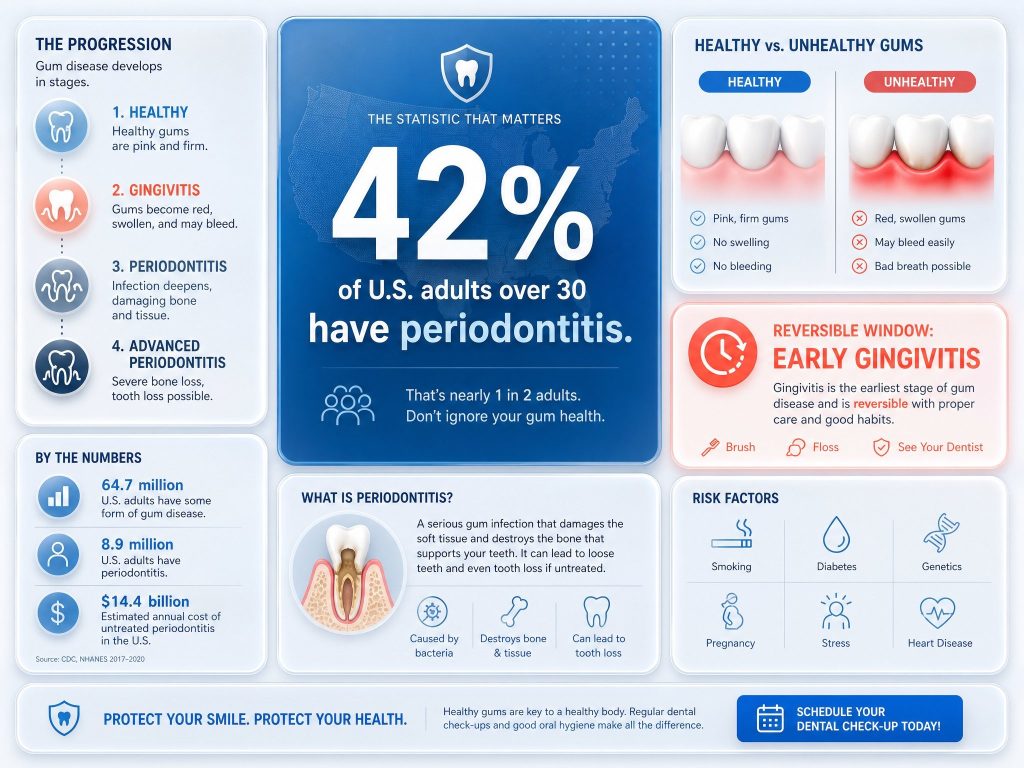
Bleeding gums when brushing is probably the most common symptom people dismiss. “Oh, I just brushed too hard.” “It happens sometimes.” Maybe. But gums on healthy people don’t bleed regularly from normal brushing, and I think a lot of people have simply convinced themselves this is baseline. It isn’t.
About 42% of U.S. adults over 30 have some form of periodontitis, which is gum disease well past its earliest stage. The early, reversible form, gingivitis, shows up exactly like this: puffiness, redness, bleeding on contact. The window to reverse it without more invasive treatment is genuinely narrow. A dental cleaning and better home care can knock out gingivitis. Advanced gum disease needs scaling, root planing, and sometimes surgical intervention.
Bleeding gums when brushing isn’t a quirk. It’s a signal the tissue is inflamed, and inflammation in the mouth has a habit of getting worse, not better, when ignored.
Tooth Sensitivity That Wasn’t There Before
Hot coffee, cold water, something sweet, and suddenly you’re wincing. Sensitivity that appears out of nowhere or gets progressively worse is your tooth telling you the enamel is compromised, the gum has receded, or something is happening near the nerve. Mayo Clinic’s breakdown of cavity symptoms puts sensitivity to temperature and sweets high on the early warning list because those are often the first sensations that register before any visible damage is obvious.
The trap is that sensitivity can fluctuate. It bothers you one week, then seems fine, then comes back worse. People read the “fine” weeks as improvement. They’re usually not.
A Sore, Spot, or Patch in Your Mouth That Won’t Heal
Most mouth sores, like canker sores, are annoying and temporary. They’re gone within a week or two. But a sore or white/red patch that hangs around longer than that, especially one that doesn’t hurt (because some don’t), genuinely warrants a look. Oral cancer screenings exist precisely because early-stage lesions can look unremarkable to an untrained eye. A dentist can catch things that would otherwise get written off as “just something weird.”
Mouth sores that persist, patches that feel different from surrounding tissue, or any ulceration that keeps returning in the same spot should prompt a dental exam, not a waiting game.
The Warning Signs Worth Tracking
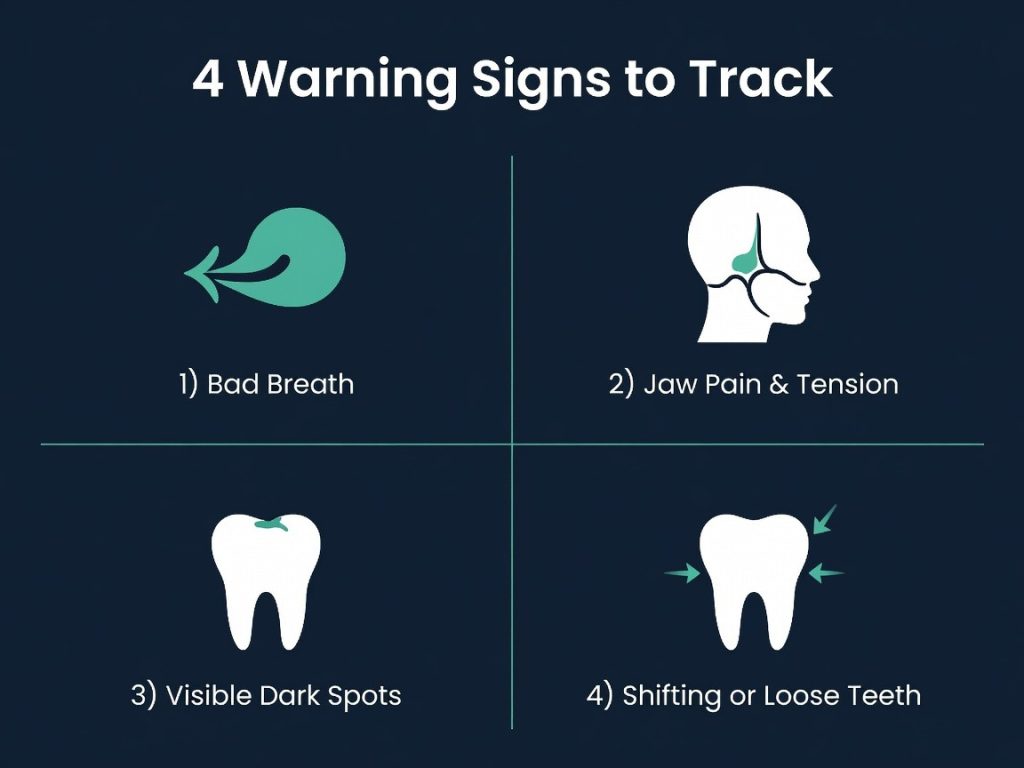
Some symptoms feel vague enough that people don’t know whether to act. Here’s a practical way to think about it:
- Persistent bad breath that doesn’t respond to brushing, flossing, or mouthwash often points to gum disease, decay, or bacteria accumulating in places your toothbrush isn’t reaching
- Jaw pain, clicking, or tension headaches concentrated around the temples and jaw can suggest bruxism (grinding) or TMJ dysfunction, both of which do structural damage over time
- Visible dark spots, pits, or changes in tooth color that weren’t there before, particularly along the gumline or between teeth, are among the earliest visible warnings of tooth decay
- Teeth that feel loose or like your bite has shifted are serious. That kind of movement in adults is almost always tied to advanced gum disease or bone loss
Pain and Swelling: When “Wait and See” Becomes a Mistake

Okay, this one I feel strongly about. If there’s swelling, stop negotiating with yourself. A toothache that’s dull and intermittent might allow a few days to schedule a regular appointment. Swelling, especially facial swelling, persistent throbbing that wakes you up, a bad taste that keeps returning, or any fever alongside dental pain, that’s a different situation entirely.
Evidence-based guidelines on acute dental pain make clear that certain presentations demand prompt intervention, not monitoring at home with ibuprofen and a prayer. Dental infections don’t drain and resolve the way a regular cut might. They can spread. Rapidly. The jaw, the neck, the airway in extreme cases. I’ve watched people do the classic escalation: “It only hurts when I bite” becomes “it hurts all the time” becomes swelling, and suddenly they’re looking at an emergency situation that could’ve been managed at a fraction of the cost and complexity weeks earlier.
The threshold is simple. Pain plus swelling means call today, not next week.
| Symptom | Urgency Level | Action |
| Mild sensitivity to hot/cold | Low to moderate | Schedule within 2-4 weeks |
| Bleeding gums, no pain | Moderate | Schedule within 1-2 weeks |
| Persistent bad breath or bad taste | Moderate | Schedule within 1-2 weeks |
| Toothache with no swelling | Moderate to high | Schedule within a few days |
| Swelling, throbbing, or fever | High | Seek care same day or next day |
| Mouth sore lasting over 2 weeks | Moderate to high | Schedule soon, don’t wait |
What a Dentist Actually Catches That You Won’t

Knowing when to see a dentist is about more than responding to pain. Routine dental checkups allow your dentist to identify problems before they become noticeable or require more extensive treatment. During a comprehensive exam, your dentist checks for early tooth decay, signs of gum disease, abnormalities in the soft tissues, bite issues, and indications of oral cancer. X-rays also help detect problems between teeth and below the gumline that aren’t visible during a visual exam or in the mirror.
Mayo Clinic’s breakdown of how oral health connects to systemic health is worth reading if you’ve ever thought of dental care as somehow separate from your “real” health. The mouth is a direct window into the body. Gum disease has documented links to cardiovascular disease and diabetes management. What starts in the mouth doesn’t always stay there.
Recognizing the signs you need to see a dentist early can help prevent more serious and costly dental problems. Many adults delay routine dental visits until something hurts, but waiting often means issues have progressed to the point where treatment becomes more complex, more invasive, and more expensive than it would have been with regular preventive care.
Between Appointments: What Actually Helps
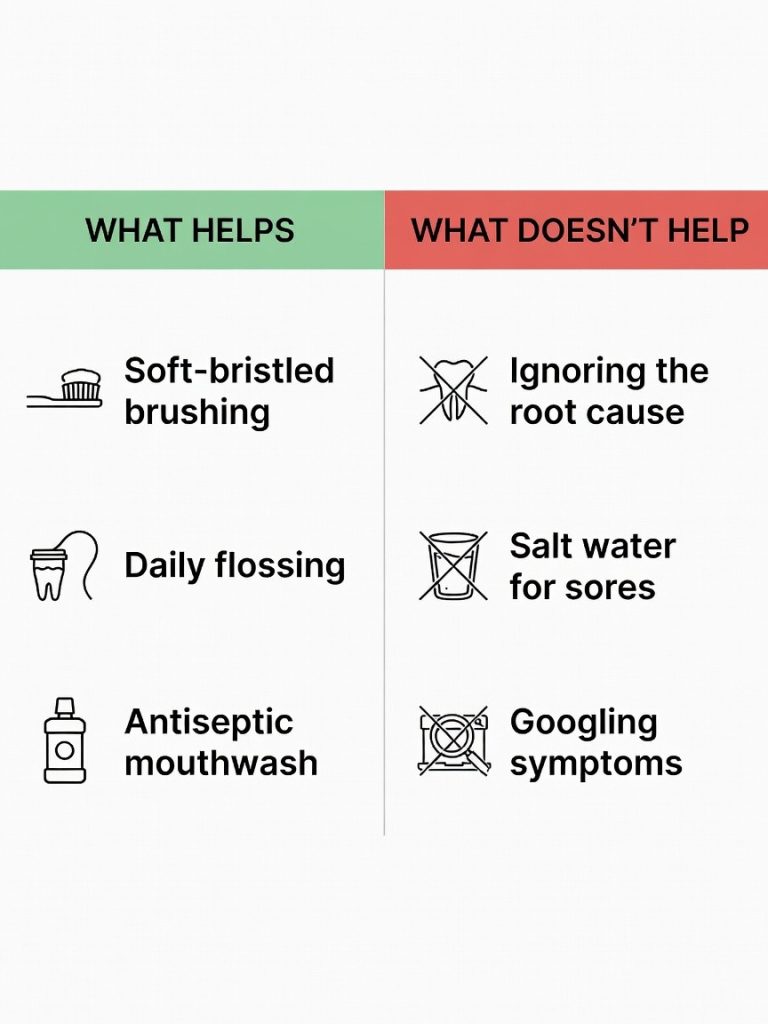
While waiting to be seen, or while managing dental health between checkups, a few things genuinely make a difference:
- Brush twice daily with a soft-bristled brush, fluoride toothpaste, and pay particular attention to the gumline where plaque tends to accumulate
- Floss daily, or use interdental brushes if traditional floss is difficult, because the spaces between teeth are where a significant portion of decay and gum disease originates
- Rinse with an antiseptic mouthwash if gum issues are a concern, but understand this is maintenance, not treatment
What doesn’t help: using sensitivity toothpaste as a substitute for finding out why you’re sensitive. Rinsing with salt water because a sore appeared. Googling symptoms and deciding it’s “probably nothing.” These are delay mechanisms. Not solutions.
South Holland Residents: The Visit You Keep Postponing
If you’re in South Holland, IL and you’ve been putting off a checkup, maybe since before the pandemic, maybe longer, Dental Care 4 U on 16270 Prince Dr. is worth calling. Dr. Raj Khurana’s practice at (708) 333-2213 handles everything from routine dental exams to more urgent concerns, and frankly, “I’ll go when something hurts” is the mindset that turns manageable problems into complicated ones. The average person tends to underestimate how quietly oral health deteriorates.
Nearly 1 in 4 adults has untreated dental decay right now. Most of them aren’t in pain yet. That’s not reassurance. That’s just how decay works before it decides to make itself known.
Frequently Asked Questions
Is it worth going to the dentist if I have no pain?
Absolutely, and arguably that’s exactly when you should go. The absence of pain doesn’t mean the absence of problems. Decay, gum disease, and even early-stage oral cancer frequently develop without discomfort until they’ve progressed significantly. A dental checkup catches issues while they’re still small and manageable.
Can bleeding gums go away on their own?
Early gingivitis can improve with diligent brushing, flossing, and a professional cleaning. But bleeding that persists despite good home care, or that suddenly gets worse, suggests something deeper is happening and a dental exam is the only way to know for certain. Don’t bank on it resolving without intervention.
How often should you go to the dentist?
Twice a year is the standard recommendation for most adults, but your specific situation may call for more frequent visits, especially if you have a history of gum disease, are prone to cavities, smoke, or have certain systemic health conditions like diabetes. Your dentist can tell you what interval makes sense for you specifically.
When does a toothache become an emergency?
When swelling appears, when pain becomes constant and severe rather than intermittent, when you develop a fever, or when you notice a bad taste that keeps returning. At that point, you’re potentially dealing with an infection that needs same-day or next-day attention, not a scheduled appointment two weeks out.