
Picking a family dentist sounds simple until you actually try to do it. You search “best family dentist near me,” get a wall of results, scan a few websites that all say basically the same thing, and somehow you’re supposed to make a decision that affects your whole household’s oral health for the foreseeable future. It’s a lot.
When thinking about what to look for in a dentist, it helps to view the decision as more than just finding a convenient office. Choosing a dentist is closer to vetting a trusted professional—the care happens inside your body, treatment decisions can have long-term effects, and the quality of the relationship matters over time.
Dental Care 4 U provides the kind of continuity families often look for in a trusted dentist. From your child’s first filling to your own crown or restorative treatment, having one dental team manage your family’s records, understand your dental history, and provide consistent care under one roof can make every stage of treatment feel simpler and more connected.
So before you book anything, run through these nine questions. They’re not fluff. They’re the filter.
The 9 Questions to Ask Before Choosing a Family Dentist
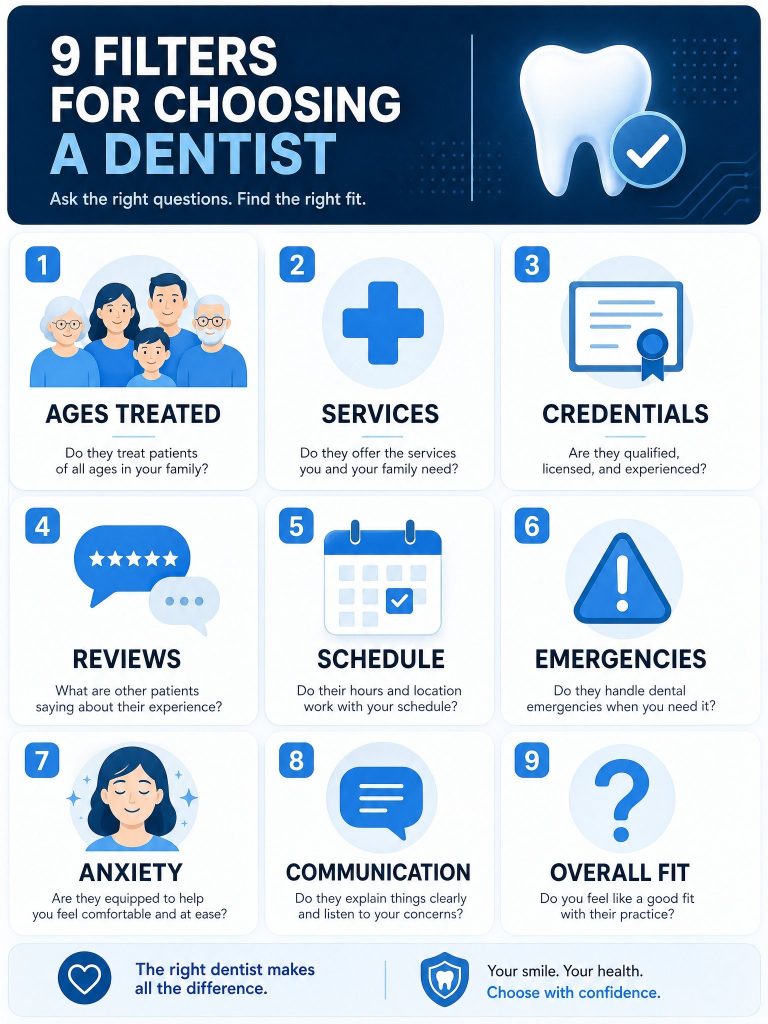
1. Does the Office Treat Both Children and Adults?
This one matters more than people realize. A lot of general dentists will technically see kids, but “technically” doesn’t always mean “comfortably.” What you want is a practice that’s genuinely set up for mixed-age households, one where your twelve-year-old and your sixty-year-old parent aren’t being handled like edge cases. Consolidated care means shared records, easier scheduling, and a dental team that understands your family’s full picture over time. The American Dental Association emphasizes that practices capable of treating all ages significantly reduce the logistical burden on families.
2. What Services Are Available Under One Roof?
Preventive care, restorative work like fillings and crowns, cosmetic options, emergency appointments, Invisalign, maybe even sleep apnea appliances — the range varies wildly between practices. A genuinely full-service office means fewer referrals, fewer new patient forms at unfamiliar clinics, and less time lost coordinating between providers. Ask specifically. “Do you handle emergencies in-house?” is a different question than “Do you offer emergency care?” and the answer can tell you a lot.
3. What Are the Dentist’s Credentials and Experience?
Education matters, but it’s not the whole picture. You want someone who’s completed an accredited dental program, maintains a current state license (verifiable through your state’s dental board via the ADA’s state licensing directory), and keeps up with continuing education — because dentistry genuinely evolves. Beyond credentials, ask about their philosophy of care. Do they lean toward conservative treatment, or do they tend to recommend aggressive intervention early? That answer shapes every appointment going forward.
4. What Do Patient Reviews Actually Say?
Reviews are useful, but only if you read them correctly. Skip the star rating and go straight to the text. Look for recurring themes: Do multiple people mention long waits with no explanation? Billing confusion? Or do patients consistently describe feeling heard, clearly informed, and treated without pressure? WebMD’s dental guidance points out that communication quality and office responsiveness are among the top predictors of long-term patient satisfaction. One bad review isn’t disqualifying. A pattern of the same complaint absolutely is.
5. Do They Accept Your Insurance?
“We accept most major insurance plans” is marketing language, not an answer. Ask specifically whether they’re in-network with your PPO. In-network providers have pre-negotiated rates that typically save families 20 to 30 percent compared to out-of-network costs. If you’re on Delta Dental, Cigna, MetLife, or a similar plan, verify directly using those carriers’ provider directories before you assume. Many offices will also verify your benefits for you before the first appointment, which is a green flag worth noting.
Here’s a rough breakdown of what cost factors tend to look like for new patients:
| Service | With PPO Insurance | Without Insurance |
| New patient exam | Low or no cost | $75–$150 |
| Routine cleaning | Covered (1–2x/year) | $100–$200 |
| Digital X-rays | Partially covered | $150–$300 |
| Follow-up treatment | Varies by plan | Varies significantly |
Always request an estimate before any procedure beyond the initial exam. Transparent pricing upfront, as Consumer Reports advises, is one of the clearest indicators of a trustworthy practice.
6. Are Appointments Actually Convenient for Your Schedule?
Distance matters. So do hours. A dentist 30 minutes away with evening appointments might realistically be more accessible than one five minutes from your house that closes at 4 PM on weekdays. Online scheduling is a practical bonus — it signals the office runs organized systems, and it removes one more friction point from the process of actually keeping appointments.
7. How Do They Handle Dental Emergencies?
This is the question most people forget until they’re in pain at 7 PM on a Friday. Ask directly: Do they offer same-day appointments for urgent issues? Is there an after-hours line, or does everything go to voicemail until Monday morning? A practice that takes emergency care seriously usually has a clear answer ready — because they’ve thought about it. One that gives a vague “we’ll do our best” response is telling you something without saying it outright.
- Ask whether the dentist is reachable after hours for urgent situations
- Find out if same-day or next-day emergency appointments are routinely available
- Clarify whether emergency care is handled in-house or referred elsewhere
8. How Do They Approach Nervous Patients?
Dental anxiety is real, and it’s remarkably common. Adults who avoided the dentist for years, kids who’ve had rough experiences, patients who need extra time and gentler communication — a good practice doesn’t treat these people as inconveniences. Look for offices that explicitly mention patient comfort, explain procedures before starting them, and let you ask questions without making you feel like you’re slowing things down. That kind of environment doesn’t happen by accident. It’s a deliberate culture, and you can usually sense it from the first phone call.
9. Do You Feel Comfortable Asking Questions?
This one’s subjective, but it’s also the most honest gut-check available. During a consultation or even just an initial phone call, notice whether the staff can clearly explain pricing, whether they respond to questions without seeming irritated, and whether the dentist can walk through a treatment recommendation without pressure. If the appointment feels like a script — limited explanations, a “you need this done” without real discussion — that’s not a minor thing. Dentistry is a space where small communication failures become big stress, especially when you’re already uncomfortable and need a real answer.
What Happens at Your First Visit
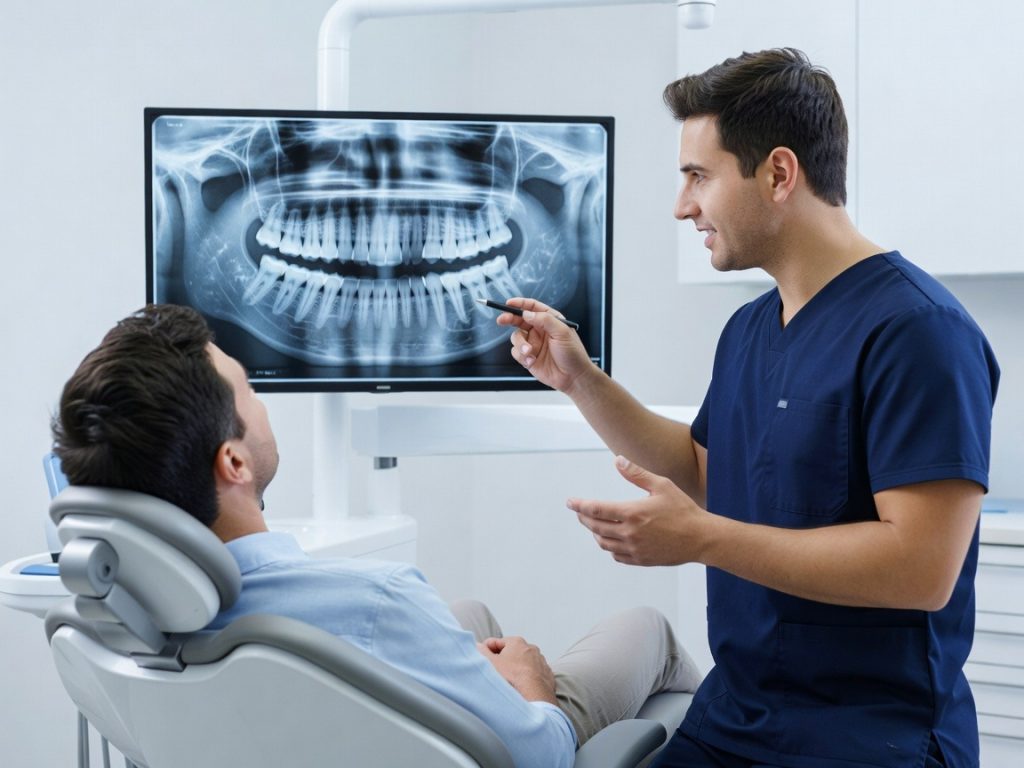
A lot of people avoid booking simply because they don’t know what to expect. For most new patients, a first appointment looks roughly like this: paperwork, a comprehensive exam, digital X-rays if needed, a cleaning when appropriate, and then a conversation about what the dentist found and what, if anything, needs attention. No surprises, no commitment to immediate procedures. A good practice treats that first visit as a chance for both sides to get familiar — because that’s genuinely what it is.
The Part Nobody Wants to Admit About Choosing a Dentist

Most people choose a dentist the way they choose a haircut: convenience first, regret later. The “it’s close, I’ll deal with it” strategy works fine until something unexpected happens — an emergency, a confusing bill, a referral that needs coordinating, a follow-up question that nobody responds to. I’ve seen it happen. Someone switches to a closer office, everything seems fine, and then the moment the relationship is actually tested — say, an urgent issue that needs follow-through after the appointment — the cracks show. Delayed responses, unclear billing, the general sense that nobody owns your problem once you’ve left the chair.
That’s what the nine questions above are designed to catch before you’re already in the middle of it.
Common Concerns Worth Addressing Directly
What if my child is nervous? A genuinely family-friendly practice has seen this before, often. Look for offices that describe their approach to pediatric anxiety specifically, not just “we’re great with kids.”
What if I’ve been avoiding the dentist for years? You’re not alone, and a good provider won’t treat you like a cautionary tale. A comprehensive initial exam identifies priorities without pushing you into an immediate treatment plan.
What if I need more than a cleaning? The exam tells you what’s going on. You’re under no obligation to commit to every treatment on the spot. A trustworthy dentist explains what’s urgent, what can wait, and why — without making you feel guilty for asking.
Should I switch dentists? If you’re consistently leaving appointments with unanswered questions, dealing with billing confusion, or feeling like your concerns aren’t taken seriously, those are legitimate reasons to look elsewhere. Loyalty to an office that isn’t serving you well isn’t a virtue.
How to Make the Final Call
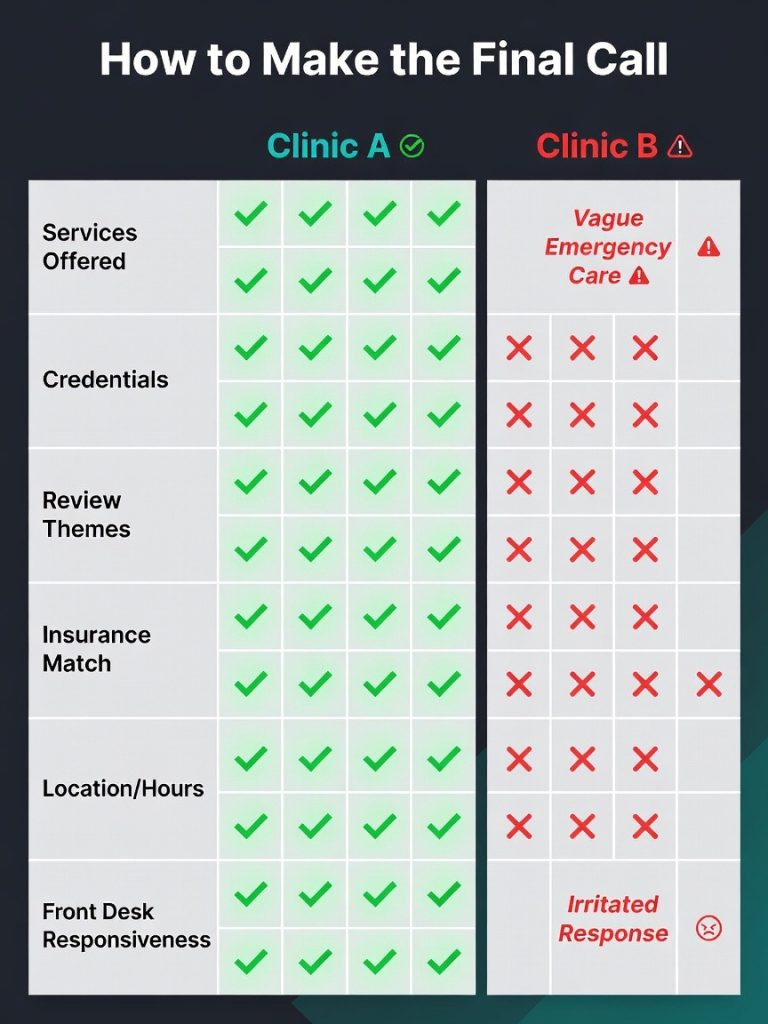
Compare practices across these factors before you decide: services offered, dentist credentials, patient reviews (looking at themes, not stars), insurance participation, location and hours, and — honestly — how the staff treats you when you call with a basic question. That last one is underrated. A disorganized front desk, an irritated response to an insurance question, a vague answer about emergency care — these aren’t small things. They reflect how the whole practice runs.
Choosing a family dentist is about finding a long-term healthcare partner, not just the nearest available appointment. The right practice earns that relationship by being clear, responsive, and capable before you’re even officially a patient.
Frequently Asked Questions

How do I know which family dentist is right for me?
Compare services, credentials, patient feedback patterns, insurance compatibility, location, and communication quality.
Is it better to have one dentist for the whole family?
For most households, yes — consolidated records, simpler scheduling, and a team that knows your family’s dental history over years is genuinely valuable. Whether that outweighs other factors depends on your specific situation.
Does dental insurance cover family dental care?
Most PPO plans include preventive benefits like exams and cleanings. Coverage for restorative or cosmetic work varies significantly by plan. Verifying benefits before your first appointment saves a lot of friction later.
What should I bring to my first appointment?
Photo ID, insurance card, a list of current medications, and any previous dental records if the office requests them. Arriving a few minutes early helps with intake paperwork.
What if I need a specialist for my child?
The American Academy of Pediatric Dentistry’s locator helps identify board-certified pediatric specialists if your child needs care beyond what a general practice typically handles.