So your kid just sprouted their first tooth, and now everyone’s got an opinion about when to drag them into a dentist’s chair. Grandma says wait until they’re older. Your pediatrician mentioned something at the last checkup. And somewhere in a parenting forum at 1 a.m., someone insisted you should’ve already gone. Frankly, the confusion isn’t your fault. There’s a lot of noise around this topic and not enough plain talk.
Here’s the answer, straight up: your child should see a dentist by the time their first tooth breaks through, or by their first birthday, whichever happens first. That’s not a suggestion pulled from thin air. It’s the standing guidance from the American Academy of Pediatric Dentistry and echoed by the American Dental Association, and it’s not because babies are prone to some dental catastrophe at twelve months. It’s because that first visit is mostly about setting the stage, not fixing problems.
Key Takeaways
- Your child should have their first dental visit when the first tooth appears or by their first birthday, whichever comes first.
- A first visit is usually simple and focuses on checking development, discussing home care, and answering parents’ questions.
- Crying or feeling nervous during the appointment is normal, and a patient dental team can help your child become more comfortable over time.
When Should a Child Have Their First Dental Visit?
Question: When should a child have their first dental visit?
Answer: A child should see a dentist when their first tooth appears or by their first birthday, whichever comes first. The first appointment typically involves a gentle examination, a discussion of brushing and fluoride, and guidance about feeding habits, pacifiers, thumb-sucking, and other factors that can affect developing teeth.
When Should a Child First See a Dentist?
This is one of the questions parents tend to overthink.
You do not need to wait until your child has a full set of teeth. One tooth is enough to start thinking about dental care.
So, when should a child first see a dentist? The general recommendation is by the time the first tooth appears or by the first birthday, whichever comes first.
The goal is prevention.
During this early stage, a dentist can look at how the teeth are coming in and check for early signs of tooth decay or other concerns. Parents also get an opportunity to ask questions about brushing, fluoride toothpaste, diet, pacifiers, thumb-sucking, and other everyday habits.
The baby first dental visit age may seem surprisingly young, but there is a practical reason for starting early. A child who becomes familiar with the dental office while they are young may find future visits less unfamiliar.
Early visits also give parents information before a small concern has a chance to become a bigger one.
You do not have to wait until your child complains about a tooth. In fact, young children may not be able to explain dental discomfort clearly, and early tooth decay does not always cause obvious symptoms.
Why Early Dental Visits Matter
Early visits aren’t really “exams” in the way adults think of exams. Nobody’s drilling anything. Nobody’s lecturing a one-year-old about flossing. What actually happens is more like a foundation-laying session, for the dental provider and the parent both.
The dentist gets a baseline look at how teeth are coming in, whether the bite looks normal, and whether there’s any early sign of decay creeping in from bottle feeding habits or prolonged nighttime nursing. Parents, meanwhile, walk away with real answers. How much toothpaste is actually safe for a toddler. Whether that thumb-sucking habit needs attention yet. What juice is doing to those brand-new teeth (spoiler: nothing good, even the “100% juice” kind).
A few concrete benefits tend to come up again and again in these early visits:
- Monitoring how baby teeth are erupting and spacing, which affects how adult teeth eventually come in
- Catching early decay before it turns into pain, infection, or an extraction
- Getting personalized brushing and fluoride guidance instead of generic internet advice
- Addressing nutrition patterns, especially bottle use and sugary drinks, before habits calcify
- Building a positive, low-stress association with dental offices before anxiety has a chance to form
None of this requires a dramatic appointment. Most of these visits are short, a lap exam, a quick look, some conversation. That’s it.
What Happens During Your Child’s First Dental Visit?
Parents sometimes imagine that a first visit will involve complicated equipment or uncomfortable procedures.
Usually, it is much simpler.
If you are wondering about kids dentist what to expect, the appointment will generally focus on getting your child comfortable, looking at their mouth, and giving you information that you can use at home.
Getting Comfortable
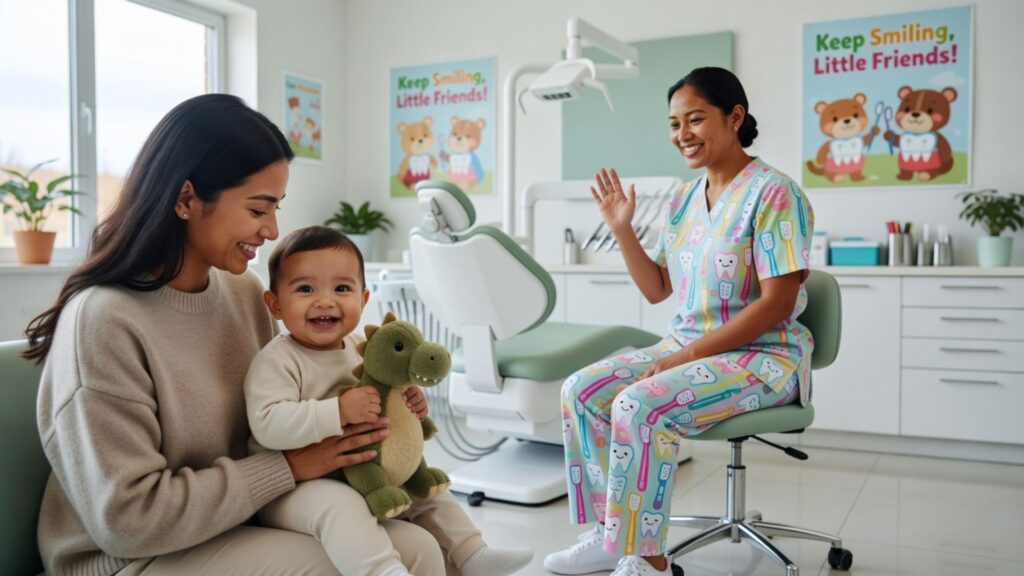
The visit usually opens with introductions, nothing clinical about it. The dental team, sometimes a student dentist working under the supervision of licensed dentists in a teaching clinic setting, spends a few minutes just letting the child get used to the space. Maybe they sit on a parent’s lap. Maybe they poke around the chair before ever sitting in it. The goal here isn’t efficiency. It’s comfort.
Gentle Dental Exam
Once the child settles, the actual exam is quick. The dentist looks at the teeth and gums, checks how the jaw and bite are developing, and gets a general read on oral hygiene at home. For most toddlers, this happens in what’s called “knee to knee” positioning, parent and dentist facing each other, child laid back between them. It looks a little odd. It works remarkably well.
Parent Education
This is where the real value shows up, honestly. The dentist walks through brushing technique (a lot of parents are doing it wrong, not out of neglect, just nobody ever showed them properly), talks through pacifier or thumb habits if they’re becoming a concern, and covers diet basics that actually affect tooth decay. It’s also the moment to ask questions. What age should flossing start. Is teething causing that fussiness or is something else going on. Parents shouldn’t hold back here.
What If My Child Is Afraid of the Dentist?
Some kids cry. Some kids fight the whole thing like it’s a wrestling match. That’s normal, and any experienced dental team has seen it a thousand times over. Dental anxiety in young children isn’t a red flag about your parenting. It’s just a kid encountering something unfamiliar.
What actually helps, based on what pediatric dental teams recommend again and again:
- Stay calm yourself. Kids pick up on parental stress faster than anything the dentist says.
- Read a picture book about visiting the dentist beforehand, or role-play the visit at home with a toothbrush and a stuffed animal.
- Schedule the appointment when your child is rested, not right after a missed nap or a skipped meal.
- Never use the dentist as a threat or punishment (“if you don’t brush, the dentist will drill your teeth” does lasting damage to that association).
- Let the child bring a comfort item, a small toy or blanket, into the room if it helps them settle.
None of this guarantees a tear-free visit. But it stacks the odds in your favor, and repeated visits almost always get easier.
Caring for Your Child’s Teeth at Home
Between visits, home care is what actually does the heavy lifting. Brush twice daily, using a soft-bristled brush sized for little mouths. For kids under three, a smear of fluoride toothpaste about the size of a grain of rice is the standard the CDC recommends; for ages three to six, that bumps up to a pea-sized amount. Once two teeth touch each other, flossing should start too, even if that feels absurdly early.
Sugary drinks and snacks deserve more scrutiny than most parents give them. Juice, in particular, gets a pass it doesn’t deserve. And skipping regular checkups because “everything looks fine” is a gamble, since early decay often shows no visible symptoms until it’s already progressed. None of this replaces a conversation with your own child’s dentist, since every kid’s risk factors differ.
When to Visit Dental Care 4 U in South Holland
If you’re in South Holland and still haven’t locked down a dental home for your child, that’s worth fixing sooner than later. Dental Care 4 U welcomes families with young kids and puts real effort into making that first visit feel unremarkable, in the best possible way. No drama, no scare tactics, just a team that knows how to work with toddlers who’d rather be anywhere else.
Dr. Raj Khurana and the staff spend time answering the small questions parents often feel silly asking, like whether a pacifier habit needs correcting or what’s normal for teething discomfort. It’s the kind of practice built around patience rather than pushing through appointments as fast as possible.
Curious what separates a genuinely kid-friendly practice from one that just says it is? Our guide on how to choose a family dentist breaks down the questions worth asking before you book, or you can reach out directly if you’ve got questions about scheduling your child’s first appointment.
Frequently Asked Questions
Is it too early if my baby only has one tooth?
No. Scheduling by the first tooth or first birthday, whichever comes first, is the standard recommendation from major dental and pediatric organizations. Early visits help monitor healthy development and give parents guidance before problems start.
What if my child cries during the appointment?
Totally common. Dental teams who regularly see babies and toddlers expect this and work at whatever pace keeps the child and parent comfortable, rather than rushing through.
How often should children see a dentist?
It depends on the individual child’s oral health and risk factors. After that first visit, the dentist will map out a recall schedule tailored to your child specifically.
Should I wait until all baby teeth come in?
No, and honestly, waiting tends to work against you. Early visits let the dentist track development and catch small issues while they’re still small, rather than after they’ve turned into something requiring real treatment.